Thu, September 17, 2026

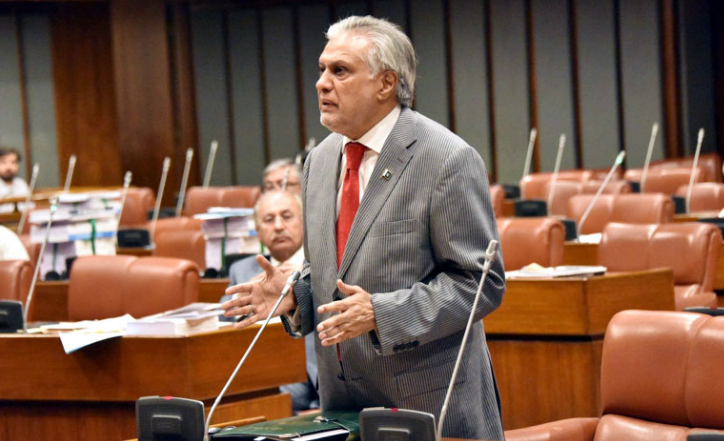
Islamabad (Web Desk): Deputy Prime Minister and Foreign Minister Ishaq Dar warned against the misuse of artificial intelligence in spreading fake news online, while also reaffirming Pakistan's unwavering stance on its nuclear capability as a tool for deterrence and regional security.
Addressing on the Senate floor, he voiced alarm at the proliferation of digitally altered and misleading content following the events of June 13, stressing the severe risks such misinformation poses to national security and diplomatic stability.
The deputy premier cited as an example the resurfacing of an outdated interview featuring Israeli Prime Minister Benjamin Netanyahu, which was falsely presented as a recent statement. The interview, he clarified, dates back to 2011 and has been misleadingly circulated across various platforms.
Among the fabricated content Dar pointed to was a fake news graphic suggesting that Pakistan could see 70 percent of its national debt forgiven if it abandoned its nuclear arsenal.
He dismissed this claim outright, calling it a complete fabrication generated through artificial intelligence. Another manipulated video he flagged involved Defence Minister Khawaja Asif and former US President Donald Trump, warning that such deceptions are being closely monitored by the Ministry of Foreign Affairs.
Urging restraint and responsibility, Dar appealed to citizens and the media to verify information before sharing it, especially during what he termed a "sensitive" moment. The widespread dissemination of fake content, he warned, could have deeply harmful consequences.
Turning to Pakistan’s recent diplomatic engagements, Dar disclosed that the country had remained actively informed throughout recent dialogue efforts between Iran and the United States (US), facilitated by Oman.
These negotiations unfolded across four rounds held in Muscat and Rome. While Iran had expressed its intent to retaliate after a recent attack, it also indicated its willingness to re-enter discussions should Israeli aggression come to a halt.
Dar highlighted Pakistan’s behind-the-scenes role in promoting diplomatic solutions, including its assistance in convening a UN Security Council session at Iran’s request.
He said Iran had formally acknowledged the diplomatic support extended by Pakistan, along with Russia, China, and Algeria.
Amid rising tensions in the Middle East, Dar outlined the Pakistani government's steps to ensure the safety and return of its nationals. A Crisis Management Unit was promptly activated within the Foreign Office, and a 24-hour emergency hotline was set up at Pakistan’s embassy in Tehran.
The minister confirmed that 251 Pakistani students currently in Iran were being relocated to Quetta, while over 500 Pakistani pilgrims in Iraq were receiving assistance for a safe return, including 209 who had traveled by road.
Dar also disclosed that Iran had reached out for help in repatriating roughly 20,000 of its pilgrims currently in Saudi Arabia. Pakistan had assured full cooperation, promising to receive the Iranian visitors in Karachi and help facilitate their respectful return home.
FM Dar noted that Saudi authorities had also agreed to host the pilgrims until the regional situation stabilizes.
On the topic of disinformation, Dar strongly denounced a deepfake video that falsely quoted an Iranian military official claiming that Pakistan would strike Israel if Iran were attacked.
He said such content was completely fabricated, noting with concern that it had even been cited by international outlets like the Daily Mail. He emphasized the recklessness of circulating such material, calling it “irresponsible and dangerous.”
Reflecting on Pakistan’s nuclear journey, Dar revisited the decision to conduct nuclear tests in 1998 under then-Prime Minister Nawaz Sharif, framing it as essential to preserving strategic balance in the region.
He pointed out that India itself had sought a ceasefire in recent years, underscoring the stabilizing impact of Pakistan’s deterrent capability.
The deputy premier reminded the Senate that neither Pakistan, India, nor Israel are signatories to the Nuclear Non-Proliferation Treaty (NPT), and affirmed that maintaining and securing nuclear capability remains a sovereign right.
“Any attempt to target nuclear infrastructure, Dar warned, would be a violation of international law and could trigger severe consequences for peace on a regional and global scale,” the minister said.
Responding to a query from Opposition Leader Senator Shibli Faraz, Dar reiterated that Pakistan remains vigilant in the face of misinformation and threats.
Dar concluded with a firm statement of resolve, assuring the House that the country is united in its defense and that its nuclear program, achieved through immense national sacrifice, will be protected at all costs.
Neo News | Copyright © 2026