Fri, September 18, 2026

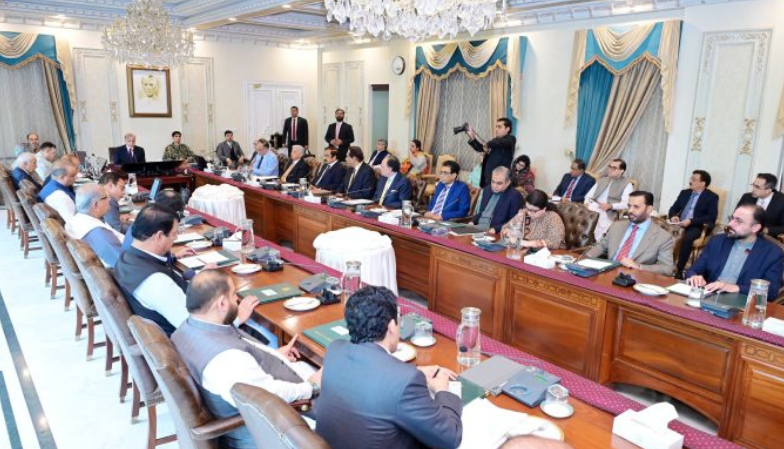
Islamabad (Web Desk): The federal cabinet, under the chairmanship of Prime Minister Shehbaz Sharif, granted approval on Wednesday for a 15% increase in pensions offered by the Employees’ Old-Age Benefits Institution (EOBI), effective from January 1, 2025.
This adjustment, proposed by the Ministry of Overseas Pakistanis and Human Resource Development, will be supported entirely through EOBI’s internal financial resources.
During the same session, the prime minister instructed the establishment of a cabinet committee dedicated to implementing structural reforms within the EOBI.
This committee will also explore policy options aimed at expanding the institution's coverage to include workers in the informal economy—such as domestic staff, agricultural labourers, and other underserved employment groups who have historically lacked access to social protection.
These reforms are intended to secure long-overdue rights for workers often excluded from formal support systems.
The cabinet gave the go-ahead for initiating legal procedures concerning the draft Sea Carriage Shipping Documents Bill, 2025, following a recommendation from the Ministry of Maritime Affairs.
On a separate front, the cabinet extended the exemption on the import of critical medications—including those used for cancer, heart conditions, and other life-threatening illnesses—for another five years.
The proposal, put forward by the Ministry of National Health Services, aims to ensure uninterrupted access to these vital drugs in hospitals and licensed health institutions. These medications will not be available for sale in open markets and will only be importable with prior authorization from the relevant licensing authority.
During the meeting, the cabinet also ratified the decisions made in earlier sessions of the Cabinet Committee on Legislative Cases, which took place on July 2 and July 3, 2025.
Addressing the cabinet, PM Shehbaz expressed appreciation for the effective arrangements made across the country during Muharram.
He acknowledged the coordination efforts of provincial administrations, federal bodies, and the authorities in Azad Jammu and Kashmir (AJK) and Gilgit-Baltistan (GB).
The prime minister also recognized the contribution of law enforcement and other stakeholders in maintaining public order during the religious period.
Turning to the issue of natural disasters, the prime minister shared details of a high-level meeting he had recently chaired with the National Disaster Management Authority (NDMA) and Provincial Disaster Management Authorities (PDMAs).
He applauded their preparedness efforts in light of the ongoing monsoon season. Expressing deep sorrow over the tragic loss of life caused by heavy rains—especially in Swat—he underscored the importance of learning from such incidents and taking preventative measures to avoid similar outcomes in the future.
On economic matters, PM Shehbaz expressed optimism over improving macroeconomic indicators and reaffirmed his administration's commitment to service delivery and tangible results. He announced that each ministry's performance would be assessed every two months.
"Ministries that demonstrate strong outcomes will be recognized, while those that fall behind will be required to justify their shortcomings," the premier said emphasizing that governance must revolve around effective delivery and accountability.
He concluded by praising Planning Minister Ahsan Iqbal and his team for the efficient use of development funds, noting that the Public Sector Development Programme (PSDP) had surpassed spending of Rs1 trillion—a milestone in public investment.
Neo News | Copyright © 2026