Fri, September 18, 2026

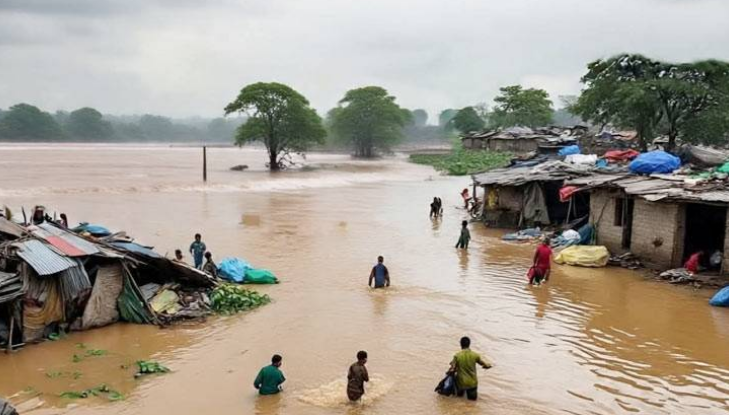
Islamabad (Web Desk): The National Disaster Management Authority (NDMA) reported on Monday that nearly 4.3 million people have been shifted from flood-hit regions to safer locations, including 2.7 million from Punjab and another 1.6 million from Sindh.
The authority appealed to communities in vulnerable areas to extend full cooperation with evacuation teams and to follow official guidelines when moving back from temporary shelters.
Citizens have also been cautioned against undertaking non-essential travel in affected zones as relief and rescue operations are still underway.
Emphasising the importance of readiness, NDMA advised households to maintain emergency kits with food, water, essential medicines, and important documents, while also encouraging the use of the NDMA Disaster Alert App for live updates and instructions.
Acting under the directives of the prime minister, the authority said its National Emergencies Operation Center (NEOC) is working round-the-clock and staying in constant coordination with both civil and military institutions to streamline rescue and relief work.
According to the latest update, the flood surge currently at Guddu Barrage is forecast to reach Sukkur Barrage in the coming two to three days and Kotri Barrage between September 24 and 26, with anticipated inflows at Kotri ranging between 400,000 and 445,000 cusecs.
Water levels in the River Chenab at Trimmu and upstream points such as Marala, Khanki, and Qadirabad are gradually returning to normal, though the Panjnad system continues to be in high flood with a flow of 308,000 cusecs.
Severe flooding is ongoing in several areas of South Punjab, including Multan, Muzaffargarh, Rajanpur, Lodhran, Bahawalpur, Rahim Yar Khan, Alipur, Sitpur, Liaqatpur, Uch Sharif, and Ahmadpur Sharqia. Meanwhile, waters have started to recede in Kasur, Okara, Vehari, and Bahawalnagar.
The River Ravi is stable except at Ganda Singh, where the flow has reached 108,000 cusecs, while the River Sutlej remains steady with discharges of 89,000 cusecs at Sulemanki and 83,000 cusecs at Head Islam.
In the Indus River, water levels at Tarbela and Taunsa remain consistent, though flood conditions persist further downstream at Guddu, Sukkur, and Kotri barrages. Guddu Barrage is under high flood with a discharge of 635,000 cusecs, Sukkur is experiencing medium flood with 538,000 cusecs, while Kotri is registering a low flood with 278,000 cusecs.
As per the reports, although water levels in Punjab’s rivers have started to recede, the flood situation in South Punjab continues to worsen, with powerful surges of the Sutlej River now advancing into Sindh and inundating hundreds of villages in the riverine belt.
In Jalalpur Khakhi, Shujaabad, a 45-year-old man lost his life after drowning while attempting to save his cattle from the rising waters. His body was later handed over to his family following legal formalities.
In Chishtian, floodwaters have engulfed 47 villages, leaving areas such as Rajo Shah, Bonga Jhed, Mazeed Shah, and Bilawal severely affected. Standing crops of rice, sugarcane, maize, and sesame have been wiped out, with more than 48,000 acres of farmland damaged. Chaachran has also suffered from medium-scale flooding that has destroyed dozens of settlements and hundreds of acres of cultivated land.
The situation in Uch Sharif is equally grim, with 25 villages completely submerged. Many areas remain cut off, houses have collapsed, standing crops have been ruined, and residents are facing severe shortages of food. Locals have complained that private boat operators are charging as much as 40,000 rupees from distressed families for transport, further compounding their suffering.
Citizens have appealed to Punjab Chief Minister Maryam Nawaz to personally visit the disaster-hit areas and ensure urgent relief. In Alipur, villages including Ghulwan Dom, Choki Gabol, and Kundrala are marooned, with houses, schools, and roads under water. Thousands of acres of crops have been destroyed beyond recovery.
In Minchinabad, flooding from the Sutlej has devastated 67 villages, affecting more than 56,000 people.
A large number of residents remain displaced under the open sky, many villages are still cut off, and families have been unable to return to their homes.
Neo News | Copyright © 2026