Fri, September 18, 2026

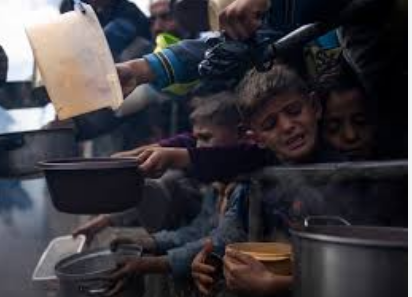
New York (Web Desk): In Gaza, the death toll among children due to hunger and malnutrition has surpassed 100, underscoring the worsening humanitarian emergency gripping the region.
Humanitarian workers are calling for immediate action to accelerate medical evacuations and open access to greater volumes of food and essential supplies. Philippe Lazzarini, who heads the UN agency for Palestinian refugees (UNRWA), described the deaths as yet another tragic chapter in what he called a war on children and their future.
He emphasized that such suffering cannot be met with silence, stressing that every child—regardless of where they are—deserves protection, safety, and a chance at life.
Since the escalation of hostilities, the crisis has been particularly harsh on Gaza’s children. Approximately 40,000 boys and girls have either lost their lives or been wounded in Israeli airstrikes, while around 17,000 children have been left unaccompanied or separated from their families.
Nearly one million others are living in trauma, deprived of education and critical psychosocial support. The physical and emotional toll is compounding daily, and humanitarian agencies warn that without meaningful intervention, the consequences could become even more catastrophic.
Thousands of children with urgent medical needs are currently trapped in Gaza, awaiting evacuation. Olga Cherevko, a spokesperson for the UN’s Office for the Coordination of Humanitarian Affairs (OCHA), recently encountered a young girl named Janah at a hospital in Gaza City. Janah had been treated earlier this year for severe malnutrition at another medical facility and had shown signs of recovery.
However, the ongoing lack of food and medical resources led to a relapse, and her condition has again deteriorated. She remains on a list of patients in urgent need of transfer for specialized care outside the Strip—a list that now includes over 14,800 people.
Cherevko noted that many children who once managed chronic health conditions are now in life-threatening situations simply because of the prolonged scarcity of food and medicine. She emphasized that under normal circumstances, many of these health issues would not have become so severe. Her plea is not only for more aid to be allowed into Gaza but for a reliable and consistent supply line to be maintained, bringing in everything from nutritional supplements to basic medications and shelter materials.
The latest data from Gaza’s health ministry reported eight additional deaths from starvation within the past day, including three children. UN officials say such announcements have become distressingly routine.
Speaking from UN Headquarters in New York, spokesperson Stéphane Dujarric reiterated the urgent need for humanitarian assistance and pointed to recent efforts by the World Health Organization (WHO) to support hospitals treating malnourished children. One such effort involved refresher training for medical staff at Rantissi Children’s Hospital, one of five centers in Gaza focused on treating severe malutrition.
According to Dujarric, since the beginning of the year, over 340 children have received treatment for malnutrition, and by early August, 49 child deaths linked to malnutrition had been officially recorded—39 of those in children under five. He also acknowledged that many more cases likely go undocumented due to the collapse of regular reporting systems and the immense challenges facing local health workers.
Mental health is another dimension of the crisis that is growing more acute. July surveys by the UN and its partners covering over 900 households revealed widespread psychological distress, particularly among children. Feelings of fear, anxiety, and hopelessness are becoming deeply entrenched, and even aid workers and medical personnel are showing signs of trauma. As a result, organizations involved in child protection and mental health are now extending psychosocial support to their own staff.
Meanwhile, efforts to bring aid into Gaza continue, with food and fuel being transported through the Kerem Shalom and Zikim border crossings.
Though there have been modest improvements in the availability of goods in local markets—sugar prices, for instance, have dropped from an exorbitant $175 per bag to around $12—most families are unable to afford even basic items due to widespread cash shortages. As Dujarric noted, access to goods means little if people lack the means to purchase them.
Despite the limited aid trickling in, humanitarian groups insist that what is currently being allowed through is far from enough to meet the needs of Gaza’s population.They continue to press for an immediate ceasefire, unimpeded access for relief convoys, and long-term solutions that prioritize the survival and dignity of civilians—especially children, whose lives and futures are hanging in the balance.
Neo News | Copyright © 2026