Fri, September 18, 2026

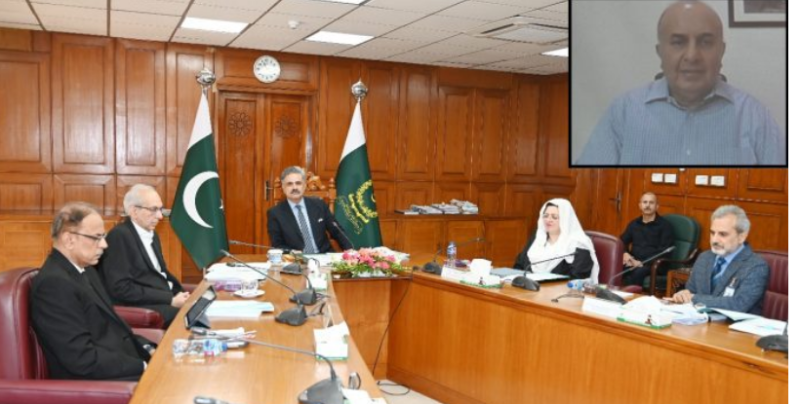
Islamabad (Web Desk): The Supreme Judicial Council (SJC), chaired by Chief Justice of Pakistan (CJP) Yahya Afridi, convened in Islamabad to assess a total of 24 judicial complaints submitted under Article 209 of the Constitution.
After thorough consideration, 19 of these complaints were dismissed unanimously, while five were postponed for future deliberation.
During the session, which took place on Saturday, the council addressed various matters, including proposed reforms related to the judiciary’s administrative framework and the handling of complaints.
An official statement confirmed that the council approved the draft of the Supreme Judicial Council Secretariat Service Rules, 2025.
However, further discussions were recommended on the proposed procedures for conducting inquiries and on the suggested changes to the judicial Code of Conduct. Members of the council emphasized the need for a comprehensive legal and linguistic review before any final decision could be made.
Justice Syed Mansoor Ali Shah participated in the meeting through video conferencing, while Justices Munib Akhtar, Aalia Neelum—who serves as Chief Justice of the Lahore High Court (LHC)—and Muhammad Junaid Ghaffar—the Chief Justice of the Sindh High Court (SHC)—were physically present.
A day prior to this meeting, the National Judicial (Policy Making) Committee (NJPMC) held its 53rd session at the Supreme Court (SC).
The committee reaffirmed its commitment to shielding judicial officers from any external pressures and directed all high courts to develop formal systems for reporting and addressing such issues within specified time limits.
The NJPMC, a statutory body charged with shaping and executing judicial policies, also expressed serious concern over the ongoing issue of enforced disappearances in the country.
It reiterated the judiciary’s constitutional responsibility to defend fundamental rights and resolved not to compromise on this obligation.
To this end, the committee formed a specialized body tasked with devising an institutional strategy to address the matter.
The committee will engage with the executive through the Attorney General for Pakistan to ensure coordinated efforts.
In addition, the NJPMC discussed a range of judicial policy matters and adopted several important measures aimed at enhancing overall judicial efficiency.
These included steps to integrate technology into court processes and initiatives focused on delivering citizen-oriented justice.
Among the approved initiatives was the creation of a Commercial Litigation Corridor, featuring designated courts and benches to handle business-related legal disputes more effectively.
Neo News | Copyright © 2026