Wed, September 16, 2026

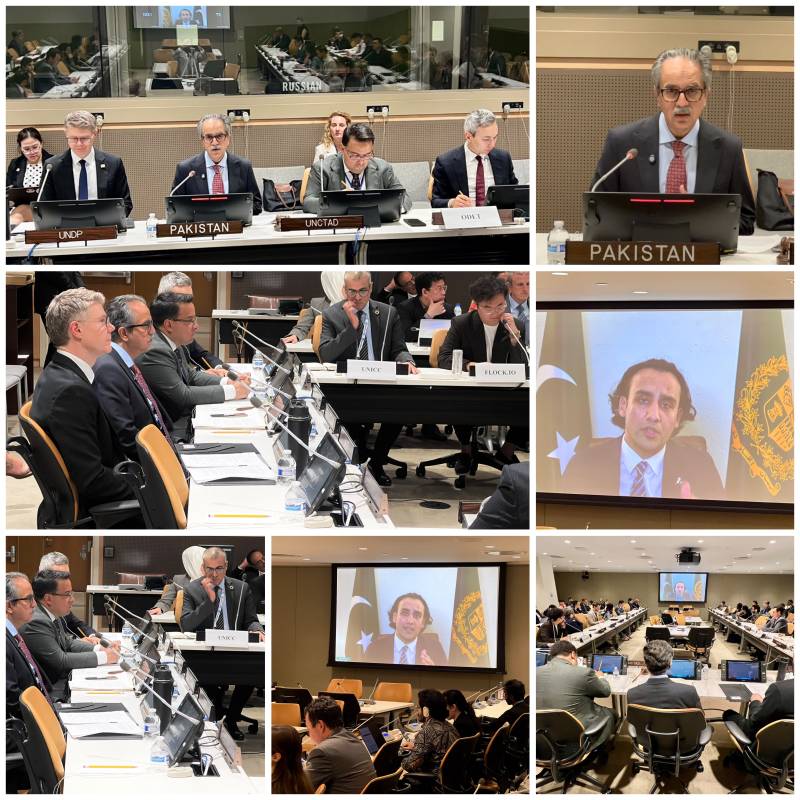
New York (Web Desk): Pakistan has hosted a high-level briefing at the United Nations on the opportunities and challenges linked to digital assets, blockchain, tokenization and distributed ledger technologies, with speakers calling for responsible, inclusive and development-oriented digital financial innovation.
The briefing was convened by Pakistan’s Permanent Mission to the UN in collaboration with the United Nations Development Programme (UNDP), United Nations Conference on Trade and Development (UNCTAD) and the Office of the Secretary-General’s Envoy on Technology (ODET).
Addressing the gathering, Pakistan’s Permanent Representative to the UN, Ambassador Asim Iftikhar Ahmad, said digital assets and blockchain technologies were increasingly becoming part of mainstream discussions on finance, investment, payments and digital transformation.
He stressed that developing countries should not remain mere users of emerging technologies but must have the capacity to understand, shape and benefit from them.
The ambassador highlighted persistent challenges faced by developing economies, including gaps in digital infrastructure, technical expertise, institutional capacity and access to finance. He called for greater international cooperation, capacity-building, knowledge-sharing and technical assistance to help countries navigate the rapidly changing digital financial landscape.
Minister of State and Chairman of the Pakistan Virtual Assets Regulatory Authority (PVARA), Bilal Bin Saqib, delivered the keynote address and outlined Pakistan’s efforts to establish a regulatory framework for digital assets.
Saqib said digital financial innovation could help lower the cost and improve the speed of cross-border remittances, expand financial inclusion and create new avenues for investment and capital mobilisation.
He emphasised that regulation and innovation should not be treated as competing objectives, arguing that clear rules could strengthen public confidence, protect users and support the responsible growth of digital financial technologies.
The minister also highlighted Pakistan’s recent steps towards establishing a regulatory architecture for virtual assets, including the creation of PVARA, legislative and licensing measures and a regulatory sandbox aimed at supporting innovation.
He identified faster and more affordable remittances, new investment opportunities through tokenisation and greater transparency in financial flows as key areas where digital financial infrastructure could contribute to development.
Saqib also pointed to potential blockchain applications in development finance, subsidies, aid and climate finance, while stressing the need for safeguards against illicit financial activity, financial losses and other risks.
He warned that differences in technological and regulatory capacity could create a new financial divide between developed and developing countries. He offered to share Pakistan’s experience in legislation, licensing and regulatory sandboxes with other developing nations seeking responsible approaches to digital assets.
The event also featured presentations by senior UN officials, including UNDP Chief Digital Officer Robert Opp, UNCTAD New York Office Chief Juan José Martinez Badillo and Deputy to the Secretary-General’s Envoy on Technology Quintin Chou-Lambert.
The speakers highlighted the importance of stronger institutional capacity, appropriate regulatory frameworks and responsible use of technology to ensure that digital innovation contributes to inclusive and sustainable development.
A panel discussion, moderated by Muhammad Faheem of Pakistan’s Permanent Mission to the UN, examined practical applications of blockchain and distributed ledger technologies in digital finance, digital identity, public services and traceability.
Participants also discussed challenges related to regulation, interoperability, cybersecurity, institutional capacity and equitable access to technology.
The discussion highlighted UN initiatives, including the UNDP Government Blockchain Academy and the SDG Blockchain Accelerator, which support governments in building institutional knowledge and exploring practical blockchain applications.
In his concluding remarks, Ambassador Asim Iftikhar Ahmad said digital assets and blockchain had significant potential to influence the future of digital finance and public-service delivery.
However, he stressed that technology alone could not deliver development outcomes, saying effective implementation required sound policies, institutional capacity, secure infrastructure and solutions tailored to national needs.
He reiterated that developing countries must be able not only to adopt emerging technologies but also to participate in shaping their future.
The briefing concluded with a call for continued cooperation among UN member states, international organisations, technology experts and other stakeholders to promote responsible, inclusive and sustainable digital financial innovation.
Neo News | Copyright © 2026