Thu, September 17, 2026

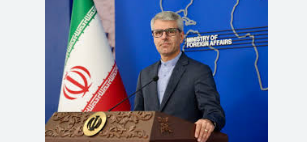
Tehran (Web Desk/Agencies): Iran on Monday described its latest proposal to the United States (US) as “reasonable and generous,” saying that its top priority at this stage is to bring the ongoing conflict to an end rather than immediately settling the question of its nuclear programme.
Iran’s Foreign Ministry spokesperson Esmail Baghaei said that Tehran’s proposal includes ending hostilities in the region, removing what Iran calls a US blockade, unfreezing Iranian financial assets held abroad, guaranteeing safe transit through the Strait of Hormuz, and working towards restoring stability across the region.
“The Islamic Republic has proven that it is a responsible power in the region,” adding, “We are not bullies; we stand against bullies.”
He further criticised Washington, accusing it of persisting with demands that Tehran considers unrealistic and unacceptable, he said.
On Sunday, US President Donald Trump rejected Iran’s response to the American proposal, calling it “totally unacceptable,” while Iranian state media reported that Tehran had also turned down what it described as Washington’s “excessive demands.”
At the centre of the disagreement are two key issues: Iran’s control and sovereignty over the Strait of Hormuz and US demands concerning Iran’s nuclear programme, particularly regarding enriched uranium stockpiles and enrichment capabilities.
Baghaei said Iran is not currently prioritising negotiations over uranium enrichment or the broader direction of its nuclear activities.
“At the current stage, our focus is on ending the war,” and added, “Later, regarding the nuclear issue, Iran’s materials and matters related to enrichment, we will discuss those issues when the time comes,” the spokesman of the Iranian foreign ministry said.
He also noted that several regional and international countries have been in contact with Tehran due to rising concerns about possible further escalation, and said Iran values such diplomatic efforts aimed at reducing tensions.
Baghaei said that Pakistan is serving as an “official mediator” between Tehran and Washington, while other countries, including Qatar, are also maintaining communication with both sides and passing on proposals to Iran’s foreign ministry.
He also warned European countries against being influenced by US or Israeli pressure regarding the conflict.
“We clearly told European countries not to allow temptations from the United States or Israel on regional issues to drag them into a crisis that will bring them no benefit,” Baghaei said, adding that many European governments themselves recognise the war as “illegal, immoral and aggressive” and have resisted pressure to support actions that could undermine global peace and security.
Baghaei said the situation in the region has worsened, particularly after US President Donald Trump rejected Tehran’s response to Washington’s proposal. He said Iran’s reply, delivered to Pakistan, was balanced and “not excessive.”
He added that Iran would respond with force if necessary but remains open to diplomacy, stressing that “whenever there is room for diplomacy, we will seize that opportunity,” while decisions will always be based on national interests.
He also referred to recent talks in China, noting that Foreign Minister Abbas Araghchi had visited Beijing to convey Iran’s position.
Baghaei described the conflict as part of ongoing unilateral actions by the US and said China sees stability in the Persian Gulf and surrounding waterways as essential to global economic security. He warned against any escalation involving the Gulf of Oman and the broader region.
He also urged European countries not to follow US and Israeli pressure amid reports they may deploy warships near the Strait of Hormuz, saying such moves could worsen tensions and increase energy prices.
Meanwhile, China’s foreign ministry also opposed US sanctions on Chinese firms linked to Iran, calling them illegal.
A spokesperson from Ministry of Foreign Affairs of China said Chinese companies would defend their lawful rights and stressed that the priority should be stopping the fighting rather than blaming other countries.
Oil prices rose sharply after Trump rejected Iran’s response, with markets reacting to fears of prolonged disruption in the Strait of Hormuz, a key global shipping route for oil and gas. Before the conflict, the waterway handled about one-fifth of global energy flows.
Iran’s proposal reportedly included ending hostilities across the region, especially in Lebanon, where US ally Israel is engaged in conflict with Hezbollah. Tehran also demanded compensation for war damage, recognition of its control over the Strait of Hormuz, and an end to sanctions and restrictions on oil exports.
Trump dismissed the proposal, saying on social media it was “TOTALLY UNACCEPTABLE,” while maintaining that the US had suggested ending fighting before broader negotiations.
Shipping through the Strait of Hormuz has fallen sharply, though some tankers still passed through with tracking systems switched off due to security concerns. The disruption has pushed oil prices higher and increased political pressure in the US over rising fuel costs ahead of elections.
The US has also struggled to gain international support, with NATO allies reluctant to deploy naval forces without a formal peace agreement and UN mandate.
Uncertainty remains over next steps, while Trump is expected to visit China for talks with President Xi Jinping, where the Iran crisis is likely to be discussed. Washington has urged Beijing to help push Tehran toward a deal.
Iranian President Masoud Pezeshkian said Iran “would never bow down to the enemy” and would defend its national interests firmly.
Neo News | Copyright © 2026