Thu, September 17, 2026

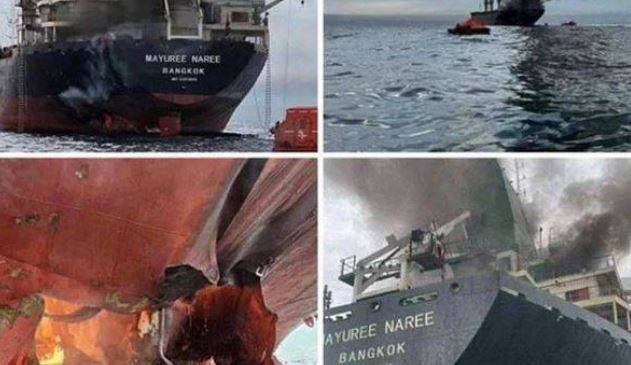
Dubai/Muscat (Web Desk): In a significant escalation of regional tensions, three international vessels were attacked by missiles and other projectiles in the Strait of Hormuz and the Gulf of Oman, raising serious security concerns for global shipping lanes.
According to the Maritime Security Agency, the affected ships were registered under the flags of Thailand, Japan, and the Marshall Islands.
One vessel was struck near the Strait of Hormuz, close to Dubai, while another was attacked approximately 11 nautical miles off the coast of Oman.
Fires broke out on the ships as a result of the attacks, but quick action by the crews managed to contain the flames. Thankfully, all personnel on board remained unharmed.
In a related development, the US Central Command (CENTCOM) announced that it had destroyed 16 Iranian vessels allegedly laying mines in the Strait of Hormuz, a critical chokepoint for global oil shipments.
The move comes amid rising confrontations in the region over maritime security and freedom of navigation.
Meanwhile, Iran’s Islamic Revolutionary Guard Corps (IRGC) claimed responsibility for launching drones and missile strikes on US military bases in the Gulf. Iranian sources reported that more than 100 American personnel were injured during these attacks, though official US statements on casualties are yet to be released.
The recent incidents have sparked widespread concern over the crude oil supply chain. Analysts warn that disruptions in the Strait of Hormuz — through which a significant portion of the world’s oil passes — could lead to sharp increases in global oil prices.
Early trading already saw a sudden surge in crude prices, signaling potential negative consequences for the global economy if the tensions persist.
Maritime security experts have emphasized that continued attacks on commercial shipping not only threaten the safety of crew members but also risk destabilizing international energy markets, underlining the strategic importance of the Gulf region in global trade.
Neo News | Copyright © 2026