Fri, September 18, 2026

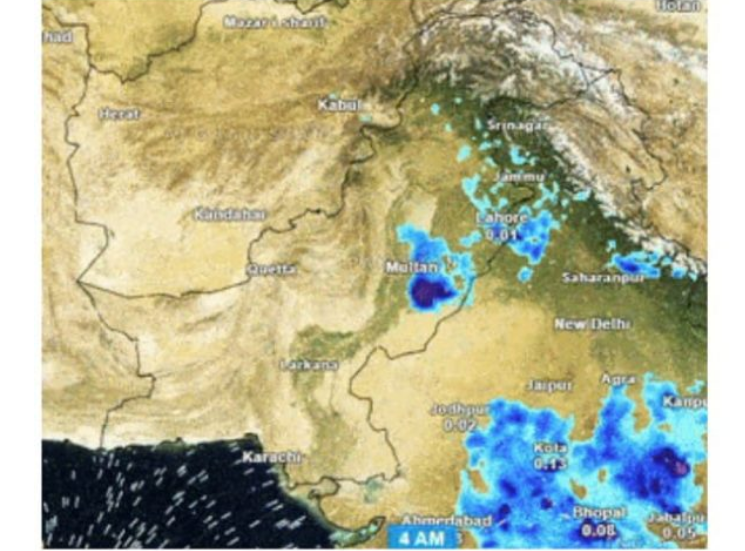
Islamabad (Web Desk): The National Emergencies Operation Center (NEOC), operating under the National Disaster Management Authority (NDMA), has issued an advisory urging citizens to take preventive measures ahead of an anticipated spell of moderate to heavy monsoon rainfall expected between Sunday and Tuesday, July 13 to 17, 2025.
According to the NEOC’s hydrological and weather outlook, a significant rain-bearing system is forecast to impact various parts of Pakistan during this period.
This weather pattern is being driven by intensified moisture inflows from the Bay of Bengal and the Arabian Sea, in combination with an active westerly disturbance.
The expected rainfall is likely to lead to increased water levels in major river systems, including the Indus, Kabul, Jhelum (particularly upstream of Mangla), and the Chenab. Currently, barrages at Tarbela, Taunsa, and Guddu are experiencing low flood levels, while Kalabagh and Chashma are at medium flood status.
Projections indicate that Taunsa may escalate to a medium flood stage, with low to medium discharge levels anticipated to persist across various monitoring points along the Indus River through the coming week.
Furthermore, the Chenab River at Marala and Khanki is predicted to rise to low flood levels, while a similar pattern is expected for the Kabul River at Nowshera. Swelling of river flows due to rainfall is also forecast for the Swat and Panjkora rivers, including their adjoining streams and drainage channels.
In regions such as Dera Ghazi Khan and Rajanpur, there is a likelihood of renewed activity in local hill torrents, which may result in medium to high-intensity flows during this wet spell.
In Balochistan, particularly the northeastern districts including Jhal Magsi, Kachhi, Sibi, Qila Saifullah, Zhob, and Musakhel, higher flows in streams and nullahs are anticipated. Southern districts like Khuzdar, Awaran, Lasbela, and Qalat may witness localized flash flooding in their river networks.
Currently, Tarbela Dam is at 74% of its storage capacity, whereas Mangla Dam is reported to be at 44%.
The NDMA has strongly advised residents in vulnerable areas near water channels, rivers, and seasonal nullahs to remain alert, particularly during periods of intense rainfall and nighttime hours.
Communities situated in flood-prone zones are encouraged to prepare emergency supplies sufficient for three to five days, secure their belongings and livestock on elevated ground, and identify safe evacuation pathways in advance.
Local administrations, especially those in northeastern and central parts of Punjab, have been directed to ensure the availability of water drainage equipment to handle potential urban flooding due to heavy rains.
The public is encouraged to stay informed through official weather and flood updates provided on television, radio, mobile alerts, and the Pak NDMA Disaster Alert mobile application.
Citizens are also reminded to refrain from attempting to cross inundated roads, low-lying bridges, or flooded causeways during the active weather period.
The NDMA continues to work in coordination with concerned departments to monitor developments and ensure timely dissemination of warnings and guidance.
Neo News | Copyright © 2026