Thu, September 17, 2026

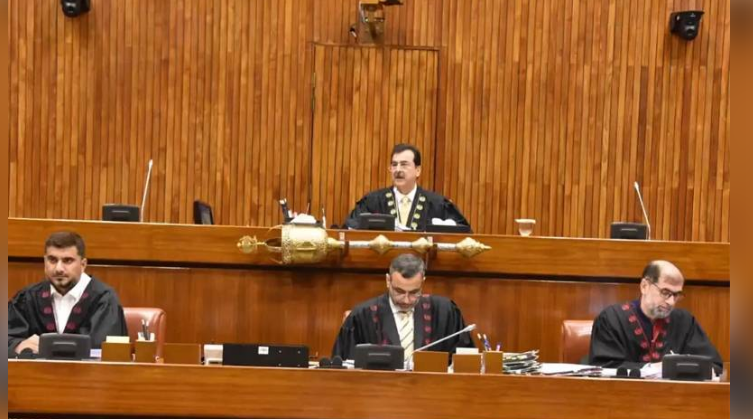
Islamabad (Web Desk): The Senate session on Monday turned chaotic as Law Minister Azam Nazeer Tarar introduced the 27th Constitutional Amendment bill for voting, sparking protests from opposition members who staged a walkout.
As Tarar began presenting the bill, opposition lawmakers erupted in anger, chanting slogans against the government and its coalition partners. Some tore copies of the bill and hurled them toward the minister’s table.
Presiding over the proceedings, Senate Chairman Syed Yousaf Raza Gilani continued to read the amended clauses aloud for voting. Most opposition members eventually left the chamber, though a few lingered briefly to continue their protest before exiting.
Earlier in the day, a joint session of the law and justice standing committees of the Senate and National Assembly, boycotted by the opposition, approved the bill with minor amendments. Farooq H. Naek, Chairman of the Senate Standing Committee on Law and Justice, presented a report on these changes to the Upper House.
Naek informed the house that the committee had studied the bill over two days and implemented several modifications. He highlighted that the bill proposes the creation of a Federal Constitutional Court (FCC), which was approved unanimously with adjustments.
The revisions include ensuring equal representation of all provinces in the FCC, along with a representative from the Islamabad High Court.
The committee also reduced the eligibility requirement for appointment to the FCC from seven years of high court service to five. Appointments from sitting Supreme Court judges will maintain their inter-se seniority, while new appointees from the high courts or legal practice will have seniority calculated from the date they take office.
In cases where multiple judges take oath on the same day, seniority will be determined based on age.
Naek further explained amendments to the Judicial Commission of Pakistan (JCP), restructured under the 26th Amendment.
Previously, the speaker could nominate a woman or a non-Muslim candidate; under the new changes, a technocrat may also be nominated if eligible to be a member of Parliament.
Regarding judicial powers, he clarified that while the Supreme Court currently exercises suo motu authority under Article 183, the FCC will do so only after reviewing the validity of submitted applications. Interim stay orders in revenue cases under Article 199 will now automatically expire after one year if no decision is reached, helping to reduce the backlog.
On judicial transfers, Naek said the amended bill changes the process from requiring presidential consent and consultation with two chief justices to transfers being managed through the JCP, which includes representatives from the executive, Parliament, judiciary, civil society, and lawyers.
The session commenced with Senator Manzoor Kakar presiding in Chairman Gilani’s absence, setting the stage for a contentious debate marked by opposition dissent and procedural disruptions.
Neo News | Copyright © 2026