Thu, September 17, 2026

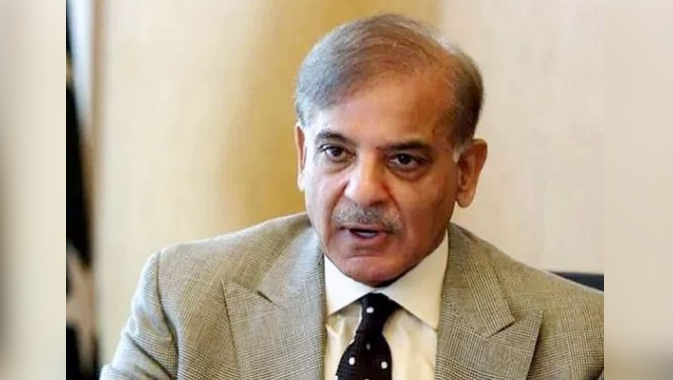
Islamabad (Web Desk): Prime Minister Shehbaz Sharif directed the Federal Board of Revenue to tighten enforcement mechanisms in order to enhance revenue collection and effectively tackle tax evasion across the country.
The prime minister issued these directions while presiding over a weekly review meeting on the performance and affairs of the tax authority in Islamabad.
During the meeting, he emphasized the need to expand the use of automated monitoring systems so that most productive sectors of the economy can be brought under a comprehensive digital oversight framework to improve tax compliance and boost government revenues.
He also directed the Drug Regulatory Authority of Pakistan to expedite the process of implementing serialization for medicines manufactured locally, stressing that the initiative should be completed as soon as possible to ensure better regulation of the pharmaceutical supply chain.
PM Shehbaz praised the government’s economic team for appointing professionals on merit to the executive leadership of Pakistan Revenue Automation Limited and acknowledged their efforts to strengthen the organization and enhance its institutional effectiveness.
In addition, he instructed the authorities to develop taxpayer facilitation platforms such as the Auto Tax System and the Digital Invoicing System under IRIS, ensuring that these applications are also available in Urdu and other regional languages so that a wider segment of the population can use them easily.
Officials briefed the meeting that a number of technology-driven mechanisms have already been introduced to monitor industrial production in different sectors with the objective of improving tax collection, while several additional systems are expected to become operational in the near future.
These mechanisms include the use of video analytics, unit-counting technologies, barcode scanning, stamping and serialization to ensure accurate monitoring of output.
Participants were informed that production tracking is currently being carried out at all sugar, cement, cigarette and fertilizer manufacturing units, a step that has already contributed to a rise in revenue collection.
Authorities are also in the process of extending similar monitoring arrangements to sectors such as textiles, leather, paper, automobiles and beverages, which are expected to generate billions of rupees in additional tax receipts.
The meeting was also told that legal amendments have been introduced to the framework governing Alternative Dispute Resolution Committees with the aim of improving transparency and rebuilding the confidence of taxpayers in the dispute resolution process.
Officials further shared that the newly formed executive team of Pakistan Revenue Automation Limited (PRAL) has formally started its operations and that the organization’s digital invoicing system has now been fully activated.
The participants were additionally informed that the new data center of the FBR, developed in line with modern technological standards, has been completed, while work is underway to implement an integrated GPS-based tracking system for petroleum products.
Moreover, the meeting was briefed that a digital cargo monitoring mechanism, particularly the e-bilty system, has been introduced to prevent smuggling and enable authorities to effectively track the movement of cargo throughout the country.
Neo News | Copyright © 2026