Thu, September 17, 2026

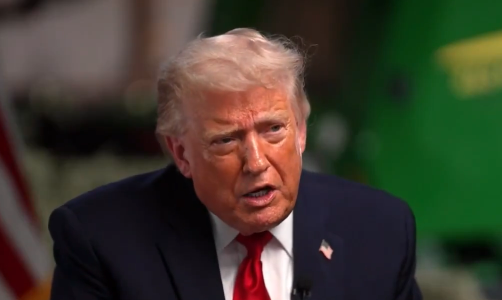
Washington (Web Desk): US President Donald Trump said on Friday that Washington has agreed to hold another round of discussions with Iran after Tehran requested renewed engagement, while making it clear that the ceasefire established between the two countries last month had come to an end.
In a post on Truth Social, Trump wrote, "The Islamic Republic of Iran has asked us to continue 'talks.' We have agreed to do so, but the United States has stated to them, in no uncertain terms, that the Cease Fire is OVER!"
— Rapid Response 47 (@RapidResponse47) July 10, 2026
His remarks followed another wave of military exchanges between the longtime rivals. Iranian armed forces launched attacks on US military facilities in Gulf states on Thursday after American strikes targeted Iran’s southern coastal and eastern provinces.
Although both sides reached an interim agreement last month that brought an end to four months of fighting, the conflict had already disrupted global energy supplies.
The continued tensions have also created political pressure for Trump, whose failure to permanently end the conflict has drawn criticism as his Republican Party prepares for midterm elections later this year. Rising fuel prices and growing voter frustration have further added to the challenges facing his administration.
Qatar has meanwhile appealed to both Washington and Tehran to respect their memorandum of understanding and continue diplomatic engagement in an effort to avoid another escalation, according to Al Jazeera.
During a telephone conversation with Egyptian Foreign Minister Badr Abdelatty, Qatari Prime Minister and Foreign Minister Sheikh Mohammed bin Abdulrahman bin Jassim Al Thani urged both sides to remain committed to dialogue.
The Qatari premier also stressed the need to protect freedom of navigation through the Strait of Hormuz, warning that ensuring safe maritime passage is essential for maintaining regional stability.
Iran, however, continued to issue strong warnings. The commander of the Islamic Revolutionary Guard Corps (IRGC) pledged revenge against the United States and Israel over the killing of Supreme Leader Ayatollah Ali Khamenei, saying the incident would never fade from history.
According to Al Jazeera, Brigadier-General Ahmad Vahidi called for the “full realisation of justice and a fitting response to the criminals, especially the child-killing American army”.
His remarks came shortly after Khamenei was laid to rest in his hometown of Mashhad on Thursday, four months after he and four members of his family were killed in US-Israeli air strikes.
Separately, the Secretary of Iran’s Supreme National Security Council said in a statement carried by Fars that retaliation "will be carried out against attacks on infrastructure, and the criminal Zionist regime will not be safe from the response of the fighters either."
Despite the escalating rhetoric, diplomatic efforts remain active behind the scenes. CNN reported on Friday, citing US officials, that Washington is attempting to reduce tensions by carefully balancing military action with ongoing negotiations.
One US official said the strategy has been to conduct limited strikes and then pause operations to allow diplomacy an opportunity to succeed. Officials added that the United States is keeping a list of potential military targets as leverage during negotiations.
Several officials also revealed that preparations remain in place for possible US military action if circumstances change, although diplomatic efforts are currently being given priority.
Meanwhile, the UK Maritime Trade Operations (UKMTO) warned that the maritime security threat in the Strait of Hormuz continues to be “severe” following recent attacks on commercial shipping.
In a notice issued by its Joint Maritime Information Center, the UKMTO said the expanded southern shipping route through the strategic waterway remains open for all vessels.
“Notwithstanding recent unprovoked attacks on merchant vessels, mariners are reminded that the southern route of the Strait of Hormuz has been expanded and remains available for all traffic,” the notice stated.
The organisation also advised ships passing through the area to expect radio communication from naval forces over very high frequency channels and to remain alert around a designated mine-danger zone.
Egypt and Qatar also reaffirmed their commitment to containing the crisis. According to Egypt’s Foreign Ministry, Foreign Minister Badr Abdelatty and his Qatari counterpart Sheikh Mohammed bin Abdulrahman Al Thani held a phone conversation on Friday to discuss the latest developments across the region.
Both ministers stressed the importance of preventing the conflict from spreading further and called on all sides to prioritise diplomacy and negotiations by implementing the existing memorandum of understanding between the United States and Iran as a pathway toward a comprehensive agreement that could ease regional tensions and strengthen long-term stability.
Abdelatty also reiterated Egypt’s condemnation of the recent attacks targeting several Gulf countries and Jordan, while emphasising the need to respect the sovereignty, unity and territorial integrity of those states and the wider Gulf region.
Separately, the International Energy Agency (IEA) reported on Friday that global oil supply recorded its biggest monthly increase in June after shipments through the Strait of Hormuz recovered.
However, the agency noted that production remains well below pre-conflict levels because security concerns continue to affect output across the region.
Neo News | Copyright © 2026