Thu, September 17, 2026

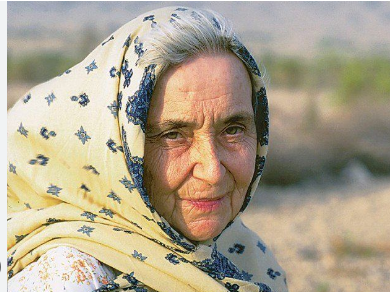
Karachi (Web Desk): Pakistan is marking the ninth death anniversary of Dr Ruth Pfau, a German doctor and nun whose lifelong humanitarian mission helped transform the fight against leprosy in the country.
Widely remembered as the “Mother Teresa of Pakistan,” Dr Pfau died on August 10, 2017, at a Karachi hospital at the age of 87, leaving behind a remarkable legacy of medical service and compassion.
Ruth Katharina Martha Pfau was born on September 9, 1929, in Leipzig, Germany, as the fourth of five daughters. Her teenage years were marked by the horrors of World War II, and she narrowly escaped death when Allied bombing raids destroyed her home.
From an early age, Pfau wanted to pursue medicine. In 1948, she left the Soviet-occupied part of Germany and travelled to Wiesbaden in West Germany to join her father. She subsequently studied medicine at the University of Mainz and later continued her studies in Marburg.
Following her graduation, Pfau became a member of the Daughters of the Heart of Mary Society. At the age of 29, she arrived in Karachi, a journey that would ultimately lead her to spend the rest of her life serving people in Pakistan.
Her defining mission began in 1960 when she saw first-hand the suffering caused by leprosy in the country. Deeply affected by the plight of those living with the disease, she resolved to devote her life to their treatment and rehabilitation.
Dr Pfau travelled extensively throughout Pakistan to assess the situation and found that leprosy patients had little access to proper medical facilities or specialised hospitals. She began raising funds for their treatment, receiving financial assistance from both Pakistan and Germany.
Her persistent efforts eventually helped pave the way for the government to launch the National Leprosy Control Program in 1968, in partnership with the Marie Adelaide Leprosy Center (MALC), while treatment centres were established in different parts of the country.
Pakistan formally granted Dr Pfau citizenship in 1988. The following year, she extended her humanitarian work to Afghanistan, where she treated and supported people affected by leprosy.
Her decades of dedication contributed significantly to controlling the disease in Pakistan, which was declared leprosy-free by the World Health Organization (WHO) in 1996.
The MALC has since expanded its network and today operates 157 leprosy control centres with a workforce of more than 800 people.
Dr Pfau’s humanitarian efforts were not limited to leprosy treatment. She also took part in relief and rehabilitation activities following the devastating earthquake that struck Pakistan in 2005 and the catastrophic floods that affected southwestern parts of the country in 2010.
She documented her experiences and work in Pakistan in four books written in German. In her 1987 book, “To Light a Candle,” she reflected on her service, while another of her works highlighted her determination to continue working rather than retire.
Her extraordinary contribution earned her numerous national and international distinctions. Among them were the Order of Merit and Nishan-e-Quaid-e-Azam in 1969, Hilal-e-Imtiaz in 1979, Hilal-i-Pakistan in 1989, the Ramon Magsaysay Award in 2002, the Jinnah Award in 2003, a Doctor of Science Honoris Causa from Aga Khan University in Karachi in 2004, the Marion Doenhoff Prize in 2005, and Germany’s Staufer Medal in 2015.
In recognition of her enduring services to Pakistan, the State Bank of Pakistan (SBP) issued a Rs50 commemorative coin bearing her honour in May 2018, months after her death.
Neo News | Copyright © 2026