Thu, September 17, 2026

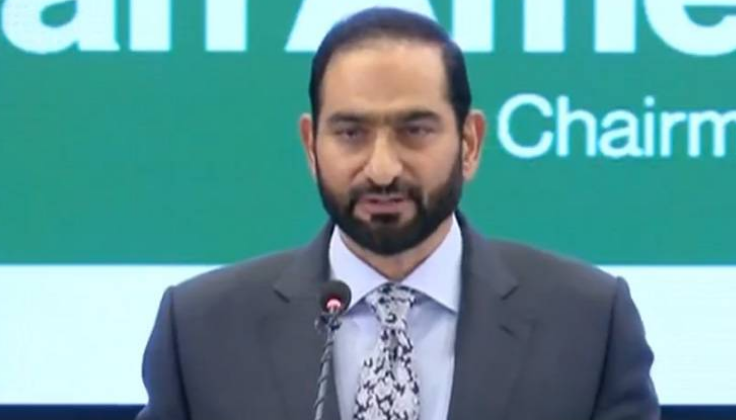
Lahore (Web Desk): Punjab Group Chairman Mian Amer Mahmood has said that the formation of new provinces is now essential to improve governance and ensure equitable distribution of resources among the people of Pakistan.
Speaking at a seminar titled "Pakistan 2030: Challenges, Imkanaat aur Nai Rahein" (Challenges, Possibilities and the Way Forward), organized by the Association of Private Sector Universities of Pakistan (APSUP), at University of Sargodha on Wednesday, he emphasized that the existing four-province structure has failed to meet public welfare needs, making fundamental reforms in the system unavoidable.
Mian Amer Mahmood noted that despite a population of 250 million, Pakistan still comprises only four provinces, with Punjab alone home to nearly 130 million people. He remarked that if Punjab were a separate country, it would rank among the six or seven most populous nations in the world.
He observed that developed countries divide their administrative structures into states, regions, and local governments to bring governance closer to the people.
Suggesting a bold administrative reform, he proposed turning each of Pakistan’s divisions into a province — resulting in approximately 33 new provinces.
Contrary to popular belief, he argued, this would not increase expenses but rather reduce administrative costs and enhance efficiency.
Mian Amer lamented that in the past eight decades, only five cities in Pakistan have experienced substantial development, while most regions remain underdeveloped.
He pointed out that in Balochistan and rural Sindh, only a handful of cities show signs of progress, whereas the rest resemble neglected settlements.
The Punjab Group chairman stressed that weak institutions breed corruption, but smaller provinces would promote decentralization, accountability, and fair distribution of resources.
Citing India’s example, Amer noted that at independence, India had only nine states, while today it has 37 administrative units. Pakistan, however, remains confined to just four provinces.
“In India, each state competes in GDP and performance, which drives progress. In Pakistan, fewer provinces mean there’s no economic competition and no emergence of new leadership,” he said.
Expressing concern over the state of education and the economy, Mian Amer Mahmood revealed that the government currently spends only Rs4,400 per child per month — an insufficient amount.
He highlighted that 25 million children remain out of school, while 44 percent suffer from stunted growth due to malnutrition.
“These children will hinder Pakistan’s progress as they will neither be productive themselves nor allow others to move forward,” he cautioned.
He asserted that Pakistan’s only path to sustainable development lies in merit, education, and the empowerment of the middle class.
“Across the world, political leadership emerges from the middle class, but Pakistan lacks a system that allows new leaders to rise,” he said.
Drawing an analogy, he added, “Arshad Nadeem won a gold medal by defeating the system — every merit-based achiever in Pakistan must break through systemic barriers.”
He further said that genuine accountability should come through the power of the vote rather than institutions.
The public, he added, should use platforms like social media to raise awareness and pressure political parties to include the creation of new provinces in their manifestos.
“We don’t need protests or road blockades; what we need is public awakening and parliamentary debate,” Mian Amer stated.
Referring to Turkey’s progress, he said that despite periods of martial law and political instability, the country prospered once Recep Tayyip Erdoğan rose to power through public mandate.
“In Pakistan, whenever a leader is ousted, people don’t take to the streets. Once true leadership emerges through the people’s vote, citizens will themselves defend democracy,” Mian Amer Mahmood said.
He added that creating new provinces such as Sargodha could improve administrative performance and reduce costs, as local officials like commissioners could serve as chief secretaries and regional police officers could act as inspectors general.
Addressing the seminar, APSUP Chairman Professor Dr. Chaudhry Abdul Rehman praised Mian Amer Mahmood’s contribution to education, noting that he has established over 400 colleges and three universities across Pakistan.
“Our youth must be guided in the right direction because the nation’s future lies in their hands,” he said.
The APSUP Chairman cautioned that unless the flaws in the current system are rectified, future generations will continue to face the same challenges.
Neo News | Copyright © 2026