Fri, September 18, 2026

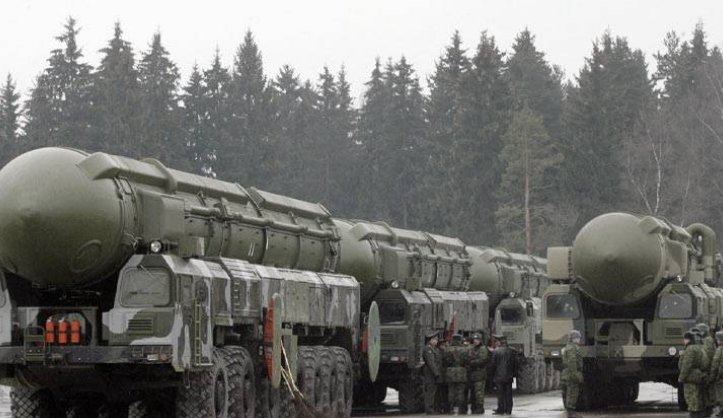
Moscow (Web Desk): Russia has officially abandoned its unilateral freeze on deploying land-based intermediate-range and short-range missiles, citing what it views as an increasingly aggressive and destabilizing military buildup by the United States (US) and its NATO allies.
The Russian Foreign Ministry stated that with Western missile systems now being positioned in Europe and the Asia-Pacific, the rationale for self-imposed restraint has evaporated.
In a formal declaration, Moscow said that the current security landscape no longer supports maintaining the moratorium it had honored since the collapse of the Intermediate-Range Nuclear Forces (INF) Treaty.
According to the statement, Western military expansion has reached a point where Russia can no longer justify holding back while its adversaries move unimpeded.
The foreign ministry emphasized that Russia had repeatedly attempted to initiate discussions on mutual limitations, but those offers were dismissed by NATO without serious consideration.
The INF Treaty, which once served as a pillar of Cold War-era arms control by prohibiting land-based missiles with ranges between 500 and 5,500 kilometers, effectively dissolved in 2019 after Washington exited the agreement.
The United States cited alleged Russian violations, which Moscow denied, calling the accusations unfounded. Since then, tensions have only escalated, with the US intensifying its military footprint and economic pressure tactics across multiple regions.
Moscow argues that the deployment of US missile systems near its borders, alongside increased militarization in the Asia-Pacific, directly endangers its national security.
Russia had proposed a joint moratorium on missile deployments, but Western powers reportedly refused to engage. As the Kremlin sees it, this refusal signals a deliberate push toward confrontation, leaving Russia little choice but to recalibrate its own strategic posture.
The situation has become further strained under the current US administration, particularly after former President Donald Trump issued a stark ultimatum demanding Russia accept Western ceasefire terms within ten days or face sweeping economic retaliation.
Measures have already begun, with the US levying a 25% tariff on Indian imports of Russian oil—an apparent move to damage Moscow’s economic ties with key partners. The Kremlin sees such actions as attempts to suffocate its economy and curtail its sovereignty.
In response, Russian officials have issued strong warnings. Former President Dmitry Medvedev invoked the country's automatic nuclear retaliation system—known as the "Dead Hand"—to underscore that Russia is prepared to act decisively if it perceives an existential threat.
Meanwhile, the US has reportedly repositioned nuclear submarines into strategic zones, a move interpreted by Moscow as another escalation.
By discarding the missile deployment moratorium, Russia is signaling its intent to respond in kind to what it describes as open hostility and strategic encirclement.
According to its leadership, continuing to abide by outdated restrictions while facing an increasingly aggressive West is no longer an option.
Neo News | Copyright © 2026