Fri, September 18, 2026

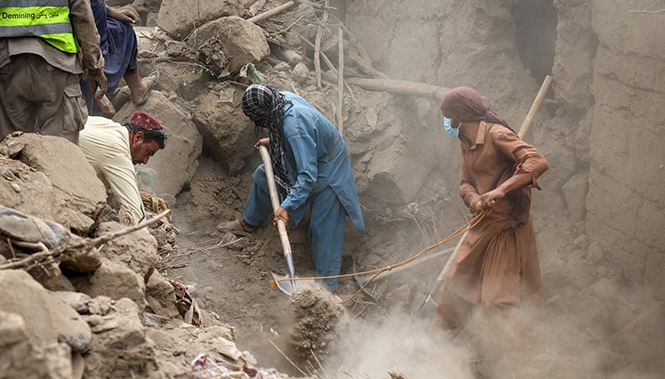
Kabul (Web Desk/Agencies): A devastating earthquake measuring 6.0 in magnitude struck eastern Afghanistan over the weekend, leaving more than 2,200 people dead, according to the latest figures released by officials on Thursday.
Rescue workers and local volunteers have been pulling bodies from the ruins, with the toll climbing to 2,217 and nearly 4,000 others reported injured. Most of the casualties have been recorded in the remote Kunar province, which lies along the border with Pakistan.
Deputy government spokesman Hamdullah Fitrat confirmed the figures on X, stressing that operations to locate the missing are continuing and warning that the earlier count of 1,469 deaths and over 3,700 injured would inevitably rise. He added that there is still hope of finding people alive beneath the collapsed structures.
Updated Report on Earthquake Casualties in Kunar Province
— Hamdullah Fitratحمدالله فطرت (@FitratHamd) September 4, 2025
September 04, 2025
In the earthquake-affected areas of Noor Gul District (Mazar Dara), Chawkay District (Diwa Gul Dara and Chapa Dara), and Manogai District of Kunar Province, search and rescue operations continue to…
Access to Kunar’s mountainous villages has been slow and dangerous, with aftershocks dislodging rocks and blocking fragile roads that cling to the sides of steep cliffs. Although many previously cut-off areas were reached by Wednesday, expectations of locating survivors have dwindled with every passing hour.
The World Health Organisation (WHO) noted that countless survivors may still be buried under the rubble in isolated communities and cautioned that the chances of rescuing them alive are rapidly diminishing.
The relief response has been hindered by the country’s poor infrastructure and a healthcare system already under severe pressure after four decades of conflict.
The WHO highlighted that medical facilities are overwhelmed, struggling with a lack of supplies, equipment and staff.
The agency appealed for $4 million to expand mobile services, distribute medicine and provide emergency care. Jamshed Tanoli, WHO’s emergency coordinator in Afghanistan, stressed the urgency, saying hospitals were stretched beyond capacity while families mourned loved ones and survivors faced total loss.
The suspension of US assistance earlier this year has worsened the strain, depleting vital stockpiles and weakening logistical support. Aid groups and UN officials warn that the disaster has compounded the multiple humanitarian crises already unfolding across Afghanistan.
UN refugee chief Filippo Grandi stated that over half a million people in the east had been affected by the quake.
The country continues to grapple with entrenched poverty, crippling drought and the forced return of millions of Afghans from Pakistan and Iran since the Taliban assumed power in 2021.
Even as Afghans struggle to recover from the earthquake, pressure from Pakistan has intensified, with authorities expelling Afghan nationals in large numbers.
On Tuesday, more than 6,300 crossed the Torkham border into quake-stricken Nangarhar province, deepening the challenges facing a nation already overwhelmed by tragedy.
Neo News | Copyright © 2026