Thu, September 17, 2026

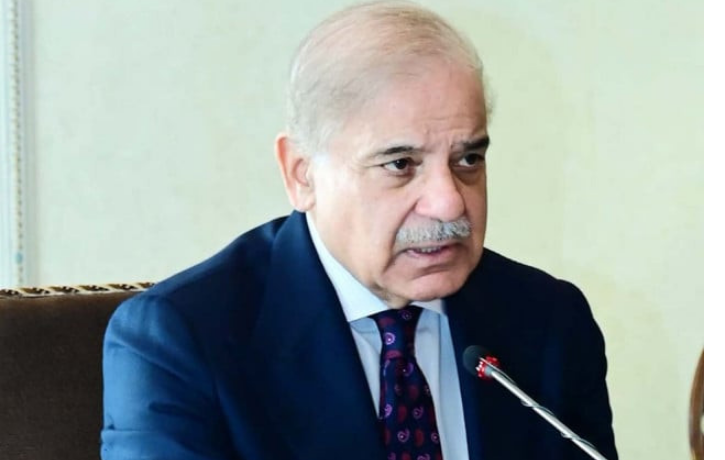
Beijing (Web Desk): Prime Minister Shehbaz Sharif, during his visit to Beijing on Thursday, assured Chinese companies that Pakistan would put an end to red tape in order to facilitate foreign investment.
His statement came as both countries finalized 21 agreements worth $4.2 billion in various sectors, marking a significant step in strengthening their economic partnership.
Speaking at the Second Pakistan-China Business to Business (B2B) Investment Conference, the prime minister introduced what he called the new phase of bilateral cooperation, formally announcing the launch of “CPEC 2.0.”
PM Shehbaz said that the gathering reflected the deep-rooted friendship between Pakistan and China, which he described as higher than the Himalayas, deeper than the oceans, stronger than steel and sweeter than honey.
Highlighting Pakistan’s commitment to efficiency, Sharif made it clear that unnecessary delays would not be tolerated.
He cited a recent example in which a Chinese investor was provided with complete facilitation within a single day, underscoring his seriousness about swift action. He assured participants that Pakistan would always consider Chinese businesses as partners, adding that the country was their second home.
The prime minister stressed that the protection of Chinese citizens in Pakistan was being treated as a top priority, affirming that their safety was essential.
Reflecting on the achievements of the China-Pakistan Economic Corridor (CPEC) since its launch in 2015, he noted that Pakistan had been struggling with up to 20 hours of daily power outages, which ended due to projects initiated under the first phase of CPEC.
He credited President Xi Jinping’s vision for helping Pakistan achieve energy sufficiency, calling it a turning point for the country.
PM Shehbaz explained that the second phase of CPEC would concentrate on business-to-business collaboration, particularly in agriculture, artificial intelligence, information technology, mineral development, and industrial relocation.
He urged Chinese companies to invest in Pakistan’s agriculture sector, which employs the majority of its population, and pointed out that Special Economic Zones provided major advantages such as affordable skilled labor and opportunities for high-quality export production through joint ventures.
In an emotional recollection, he shared that during his first visit to China in 1982, he observed the country’s resilience and predicted its success.
Today, he said, China had risen to become the world’s second-largest economy and a formidable global power, lifting over 700 million people out of poverty.
He praised President Xi Jinping’s leadership for promoting inclusive growth and reshaping the destiny of several nations through his dynamic policies.
The prime minister closed his remarks by reiterating Pakistan’s determination to rebuild its economy with the support of China, acknowledging the challenges but stressing that the goals were achievable.
He said the new era of cooperation would lay the foundation for a stronger, more vibrant Pakistan.
The event was attended by senior dignitaries from both countries, including Deputy Prime Minister Ishaq Dar, Pakistan’s Ambassador to China Khalil Hashmi, federal ministers, and the Chairman of the China Council for the Promotion of International Trade.
Neo News | Copyright © 2026