Fri, September 18, 2026

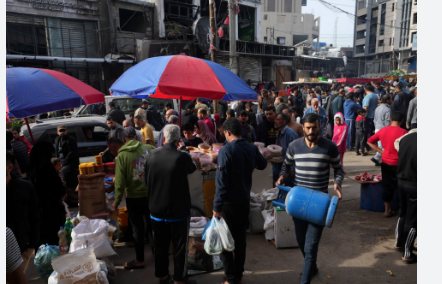
Geneva (Web Desk): Israel’s decision to halt all aid from entering Gaza after Hamas reportedly rejected a proposal to continue with the first phase of the ceasefire has quickly escalated the humanitarian crisis.
According to the United Nations (UN), this move has led to a dramatic surge in the prices of basic necessities, with the cost of flour and vegetables soaring by more than 100 times, further exacerbating the suffering of Palestinians, especially during the holy month of Ramadan.
The UN’s Office for the Coordination of Humanitarian Affairs (OCHA) reported that the closures of key crossings—Kerem Shalom, Erez, and Zikim—have effectively cut off vital supplies to Gaza, including tents and other essential items for displaced civilians.
The first phase of the ceasefire agreement, which had been brokered by Egypt, Qatar, and the United States, expired on Saturday.
Hamas, however, urged Israel to proceed to the next phase of the plan. Instead, Israel has called for an extension of phase one until the end of the month, aligning with a proposal put forward by a top U.S. envoy.
The ceasefire, which began in January, had already facilitated the release of 33 Israeli hostages who had been captured on October 7, while around 1,900 Palestinian prisoners were freed in return.
UN spokesperson Stéphane Dujarric shared that the initial ceasefire allowed aid to be distributed, providing food, water, and medical assistance to the people of Gaza.
However, with the closure of the crossings, prices for basic goods like flour and vegetables have surged more than 100-fold. Aid organizations are now urgently assessing available stockpiles, which are rapidly depleting.
UNICEF has also raised alarms, stating that the suspension of aid will have devastating consequences for the most vulnerable, especially children.
Edouard Beigbeder, UNICEF’s Regional Director for the Middle East, emphasized that the suspension of aid would critically hinder lifesaving efforts. Between January 19 and last Friday, nearly 1,000 trucks from UNICEF had delivered clean water, medical supplies, vaccines, and food to Gaza.
Since the ceasefire took effect, UNICEF has distributed warm clothing to 150,000 children, provided water to nearly half a million people in remote areas, and offered nutritional supplements to over 250,000 children, pregnant women, and breastfeeding mothers.
In addition, aid workers have been distributing vegetable seed kits in certain areas of Gaza, aiming to improve the local diet.
Despite these efforts, there is still an urgent need for materials to maintain water distribution systems, with around 1,500 water points now operating in Gaza—double the number from the start of the ceasefire.
However, OCHA reports that essential parts like pipes and maintenance supplies are urgently needed. Over 100 schools have reopened across Gaza, enabling approximately 100,000 children to resume their education, while temporary learning spaces using tents and recycled materials have been set up in Gaza City and North Gaza.
OCHA teams also visited a displacement site in Khan Younis, where about 1,200 people are currently staying. These individuals have been unable to return to their homes in the buffer zone.
OCHA is working to mobilize support to meet their needs, while continuing efforts to assist those in need across the region. In the West Bank, OCHA noted that ongoing Israeli operations have further intensified the humanitarian needs, particularly in the northern areas, where movement restrictions are hampering the delivery of aid.
The situation remains critical, and as the humanitarian crisis deepens, there is increasing pressure on international organizations to find ways to ensure aid reaches those who need it most.
Neo News | Copyright © 2026