Thu, September 17, 2026

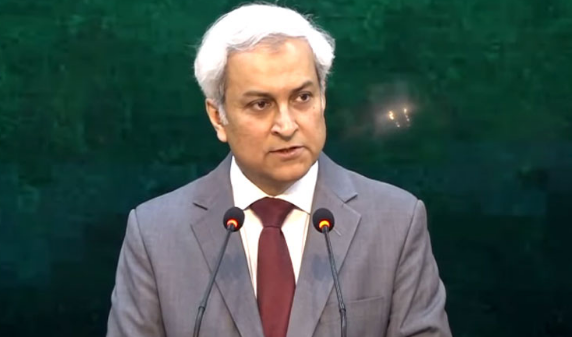
Islamabad (Web Desk): Pakistan on Thursday expressed optimism regarding the ongoing efforts to facilitate dialogue between the United States (US) and Iran, despite provocative statements from either side.
Speaking at his weekly briefing in Islamabad, Foreign Office (FO) Spokesperson Tahir Andrabi stated that Pakistan would be honored to host and support substantive talks between the two sides in the coming days, with the aim of reaching a comprehensive and lasting settlement.
He noted Pakistan’s satisfaction with the trust both the US and Iran have shown in the country to mediate these talks. Andrabi also underscored Pakistan’s condemnation of Iranian attacks on Gulf nations, as well as previous attacks targeting Iran itself.
When asked about the five-point framework announced after Deputy Prime Minister Mohammad Ishaq Dar’s recent visit to China, Andrabi said the initiative, focused on ending hostilities, easing regional tensions, and initiating dialogue among concerned parties, has received widespread approval, including from the United States. He described it as a meaningful effort toward halting conflict and establishing a sustainable pathway for a lasting resolution.
Andrabi affirmed that Pakistan would persist in its facilitation efforts despite any challenges, continuing to advocate for dialogue and peaceful solutions.
When asked about the planned visits of US and Iranian delegations to Pakistan, Andrabi clarified that decisions about the agenda, the composition of delegations, and the timing would be determined by the parties themselves.
On the question of potential Israeli participation, he said Pakistan had no information, but noted that consultations were ongoing with the US, European partners, the OIC, and GCC countries, some of which maintain diplomatic ties with Israel.
“While there are challenges and potential obstacles in this delicate process, Pakistan remains committed to facilitating dialogue and promoting diplomacy,” he said.
Andrabi rejected suggestions that Pakistan was pressuring Iran to accept US demands, emphasizing that the country’s role is to support dialogue, not impose policy.
He also pointed to a recent positive development in trade and maritime cooperation: Iran has allowed 20 additional ships under the Pakistan flag to transit the Strait of Hormuz, with two ships crossing daily. “This step is a meaningful advance in our collective efforts to build confidence and strengthen diplomatic engagement,” he added.
The FO spokesperson cautioned the media against misreporting, specifically regarding Iran’s participation in the talks, and warned of the dangers of false narratives propagated by certain actors in Afghanistan and India.
“In a sensitive situation where tensions are high, misinformation can be extremely harmful,” he said.
Andrabi highlighted that Pakistan’s initiatives have received support from the European Council, Malaysia, and other nations. “All those who genuinely seek peace recognize and value Pakistan’s efforts. Rhetoric from the parties involved is expected, but it does not deter us from pursuing dialogue,” he added.
Replying a question, he also provided an update on Pakistan’s engagement with Afghanistan, stating that a senior delegation is currently in Urumqi, China, in discussions with Afghan officials.
“Pakistan has never avoided negotiations and remains actively engaged with China on Afghan matters,” he said.
Andrabi said that the onus for meaningful progress lies with Afghanistan, which must demonstrate verifiable action against terrorist groups operating from its territory.
In response to the UAE-Afghanistan ministerial call, he stressed that Afghanistan’s stated intent must be supported by concrete written assurances preventing the use of its territory for attacks on Pakistan.
The FO spokesperson recalled that similar commitments were documented by the Taliban in Doha in 2021 but remained unfulfilled.
Answering another question about India’s recent remarks concerning the Shia community in Pakistan, Andrabi strongly rejected the comments, calling them cynical and diversionary.
He stressed that Shias in Pakistan are part of the mainstream Muslim community alongside Sunnis, and framing them in a majority-minority context is both incorrect and dangerous.
“Such characterizations risk fostering sectarianism within our society, similar to the terrorism India has long fueled in Pakistan,” he said.
Andrabi also cautioned that India should recognize its own Muslim population includes both Shia and Sunni communities, and inflaming sectarian divides could have negative consequences for their own country.
Highlighting other diplomatic engagements, he mentioned that Prime Minister Shehbaz Sharif had held calls with Kuwait’s Crown Prince, Iran’s President Dr. Masoud Pezeshkian, and European Council President António Costa.
Likewise, Deputy Prime Minister Dar spoke with the foreign ministers of China, Egypt, Qatar, Indonesia, Iran, and UN Secretary-General António Guterres to discuss regional, bilateral, and global issues of shared concern.
The FO spokesperson said that during the conversations, the leaders discussed the regional issues as well as bilateral and global matters of mutual concern.
Neo News | Copyright © 2026