Thu, September 17, 2026

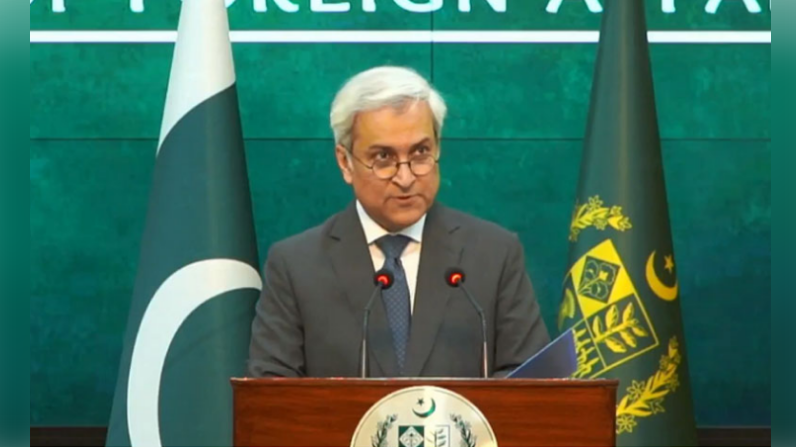
Islamabad (Web Desk): Pakistan has voiced optimism for constructive progress in the upcoming round of negotiations with the Afghan Taliban, reaffirming its preference for dialogue over confrontation while urging Kabul to take firm and verifiable measures against militant elements operating from its territory.
At his weekly media briefing on Friday, Foreign Office (FO) Spokesperson Ambassador Tahir Hussain Andrabi said Pakistan does not seek any escalation but expects the Afghan authorities to act decisively against terrorist groups such as Fitna al-Khwaraj and Fitna al-Hindustan.
Andrabi noted that Islamabad’s approach has been one of restraint and constructive engagement, emphasizing the need to ensure that Afghan soil is never used to threaten Pakistan’s security.
He made it clear, however, that Pakistan’s patience should not be mistaken for weakness. “We remain committed to peace and regional stability but will respond firmly to any continued provocation,” he stated.
Ambassador Andrabi briefed reporters about the recent Pakistan–Afghanistan dialogue held in Istanbul from October 25 to 29.
The discussions, initially set for two days, were extended to four, reflecting both sides’ willingness to seek understanding.
He said Pakistan joined the process in good faith, appreciating the facilitation of Qatar and Türkiye. He expressed hope that the next round of talks, scheduled for November 6, would produce tangible outcomes.
Commenting on Prime Minister Shehbaz Sharif’s visit to Saudi Arabia from October 27 to 29, the spokesman said the trip marked a significant step forward in Pakistan’s partnership with the Kingdom.
“During PM Shehbaz’s engagements in Riyadh, including a meeting with Crown Prince and Prime Minister Muhammad bin Salman, the two sides announced the formation of a Pakistan–Saudi Economic Cooperation Framework, ushering in a new era of collaboration across multiple sectors,” the FO spokesperson said.
Ambassador Andrabi said the framework will strengthen cooperation in key areas such as energy, mining, information technology, agriculture, tourism, and food security. Preparations are already underway for the next session of the Saudi–Pakistan Supreme Coordination Council, where both countries are expected to finalize agreements on electricity interconnection and energy collaboration.
He added that PM Shehbaz also met World Economic Forum President and CEO Børge Brende, who invited him to participate in the upcoming WEF Annual Meeting in Davos in January 2026.
Deputy Prime Minister and Foreign Minister Senator Mohammad Ishaq Dar, who accompanied the Prime Minister to Riyadh, held bilateral talks with Saudi Foreign Minister Prince Faisal bin Farhan on October 28.
Both sides discussed regional developments, particularly the Gaza situation, and reaffirmed their intent to strengthen cooperation in multilateral forums. Senator Dar also inaugurated the upgraded Consular Hall and One-Window MRP Service at Pakistan’s Embassy in Riyadh to enhance services for overseas nationals.
The spokesperson said that FM Dar also held telephonic conversations with his counterparts from Canada, Algeria, and Türkiye. His discussion with Canadian Foreign Minister Anita Anand focused on trade, investment, and agricultural collaboration under the Foreign Investment Promotion and Protection Agreement, while the Canadian side expressed appreciation for Pakistan’s facilitation of canola exports.
In talks with Algerian Foreign Minister Ahmed Attaf, both sides reaffirmed their commitment to advancing bilateral ties.
With Turkish Foreign Minister Hakan Fidan, Senator Dar discussed developments in Gaza and received an invitation to participate in an upcoming diplomatic meeting in Türkiye concerning the Palestinian issue.
Addressing the Middle East situation, the FO spokesperson strongly condemned Israel’s ongoing violations of the Gaza ceasefire, calling them blatant breaches of international law and a direct threat to peace efforts.
He reaffirmed Pakistan’s unwavering stance in support of a viable and independent Palestinian state based on pre-1967 borders, with Al-Quds Al-Sharif as its capital.
The spokesman also drew attention to the third session of the Pakistan–EU Migration and Mobility Dialogue, which took place in Islamabad this week.
Both sides reviewed ongoing cooperation on migration management and labor mobility and agreed to continue their engagement under the Pakistan-EU Talent Partnership Roadmap, with the next round of talks to be held in Brussels.
Marking October 27 as Kashmir Black Day, Ambassador Andrabi said Pakistan observed 78 years of India’s occupation of Jammu and Kashmir with solemnity and renewed its unwavering moral, political, and diplomatic support for the Kashmiri people’s right to self-determination.
He noted that the day was commemorated through seminars, exhibitions, and solidarity walks held across Pakistan and by its diplomatic missions abroad.
Letters were also sent by the Deputy Prime Minister and Foreign Minister to the leadership of the UN and OIC, drawing attention to the ongoing human rights violations in Indian Illegally Occupied Jammu and Kashmir (IIOJK).
He also conveyed Pakistan’s condolences to the people of Thailand on the passing of Queen Mother Sirikit, praising her lifelong commitment to humanitarian service, and expressed solidarity with Turkiye following the October 28 earthquake, assuring that Pakistan stood ready to provide humanitarian assistance.
Ambassador Andrabi said Pakistan’s foreign policy is anchored in peace, mutual respect, and constructive engagement. “Our position is principled and consistent,” he said.
“Pakistan desires cooperation and friendly relations with all its neighbours, yet it will safeguard its sovereignty, territorial integrity, and national security with absolute determination,” the FO spokesperson said.
Neo News | Copyright © 2026