Thu, September 17, 2026

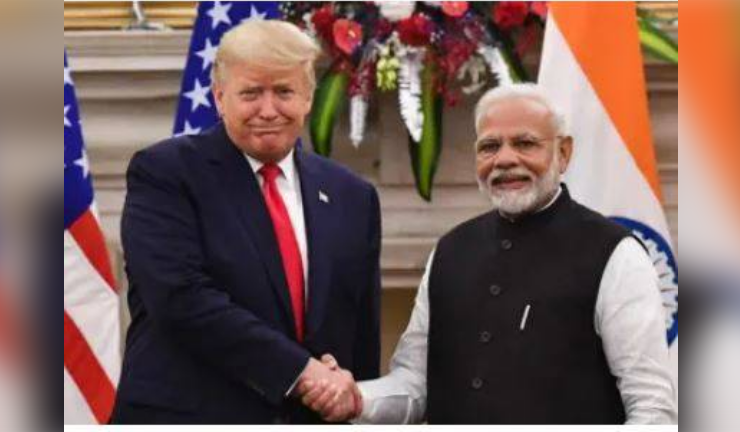
Washington (Web Desk): US President Donald Trump announced on Wednesday that the United States will introduce a 25% tariff on goods imported from India, beginning August 1.
The US president also mentioned that India would face an additional, unspecified penalty on the same date, although he did not clarify what form this would take or how severe it would be.
In a post on Truth Social, Trump explained his reasoning, saying, “While India is our friend, we have, over the years, done relatively little business with them because their Tariffs are far too high, among the highest in the World, and they have the most strenuous and obnoxious non-monetary Trade Barriers of any Country.”
He went on to criticize India's defense and energy ties with Russia, writing, “They have always bought a vast majority of their military equipment from Russia, and are Russia’s largest buyer of ENERGY, along with China, at a time when everyone wants Russia to STOP THE KILLING IN UKRAINE — ALL THINGS NOT GOOD!”
The Indian government has not yet issued an official response. The country’s commerce ministry, which leads trade negotiations with the US, declined to comment immediately when approached.
This move effectively ends prospects for a partial trade pact between the two nations, which had been under discussion for several months.
Negotiators from both sides had met on multiple occasions to try and resolve long-standing issues, particularly regarding access to the Indian market for American agricultural and dairy products.
Although some progress was reported, India remained firm on protecting its agricultural sector from imports such as wheat, corn, rice, and genetically modified soybeans, citing threats to the livelihoods of millions of farmers.
The proposed tariffs are expected to affect Indian exports to the US, which are projected to reach approximately $87 billion in 2024. These include sectors such as pharmaceuticals, textiles, petrochemicals, and jewelry — industries known for their labor intensity. The US currently runs a $45.7 billion trade deficit with India.
India now joins a widening list of countries being targeted under Trump's "Liberation Day" trade policy, a strategy that seeks to overhaul US trade relationships by demanding more balanced terms.
The White House had previously criticized India’s high tariff structure, especially in agriculture, where average tariffs are around 39%, reaching 45% on vegetable oils and nearly 50% on apples and corn.
The latest development comes despite earlier public commitments by Indian Prime Minister Narendra Modi and Trump to conclude the first phase of a trade agreement by fall 2025, and to raise bilateral trade to $500 billion by the end of the decade — up from the current level of $191 billion recorded in 2024.
There are also concerns about possible retaliation from India. U.S. exports to India — including manufactured goods valued at around $42 billion and energy exports such as crude oil, coal, and liquefied natural gas — could face countermeasures if India opts to respond in kind.
Indian officials have previously underscored the importance of the United States as a strategic ally, particularly in the Indo-Pacific region and in efforts to counterbalance China's influence.
However, they have also been consistent in their position that preserving domestic flexibility in areas such as agriculture, digital regulation, and public subsidies remains a national priority.
Neo News | Copyright © 2026