Thu, September 17, 2026

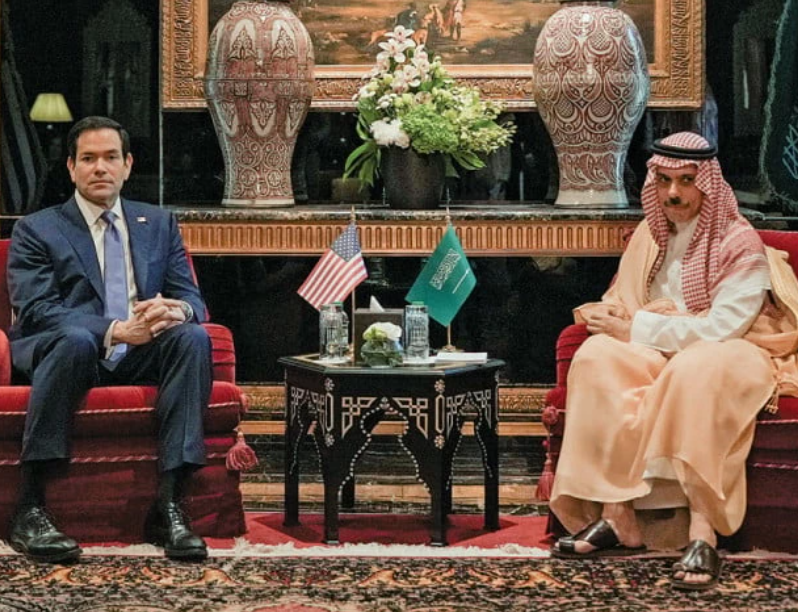
London/Manama (Web Desk): The United States has reaffirmed its commitment to reaching a comprehensive agreement with Iran but insisted that no deal will be accepted if it compromises the security of Gulf allies or restricts free navigation through the Strait of Hormuz.
Speaking during a visit to Bahrain, US Secretary of State Marco Rubio said Washington supports diplomacy with Tehran but stressed that any agreement must protect the stability, security and economic interests of Gulf partners. He emphasized that the US would not support any arrangement that undermines regional peace or allows Iran to impose charges on commercial shipping using the Strait of Hormuz.
Rubio's remarks came as negotiations between the United States and Iran resumed following a preliminary agreement aimed at ending months of conflict. The talks are expected to focus on Iran's nuclear programme, sanctions relief and the future of maritime trade through the strategically important waterway.
However, uncertainty remains over whether negotiations will also cover Iran's ballistic missile programme and its support for allied groups in the Middle East. During a visit to Pakistan, Iranian President Masoud Pezeshkian said Tehran's missile programme was not included in the memorandum of understanding with Washington and would not be discussed.
At a meeting in Manama, Gulf Cooperation Council (GCC) foreign ministers called for any final agreement to address what they described as the full range of Iran's regional activities, including its missile programme, drone capabilities and support for proxy groups. They also stressed that future economic cooperation with Iran would depend on its compliance with any final agreement and an end to destabilising actions.
Rubio reiterated that the Strait of Hormuz is an international waterway and rejected any proposal to impose transit fees on commercial vessels. He said unrestricted navigation through the strait is essential for global trade and energy security.
Iranian Foreign Minister Abbas Araghchi, meanwhile, held talks with Oman's Foreign Minister Badr Albusaidi on the future management of the Strait of Hormuz. While Iran and Oman have discussed possible maritime service arrangements, Oman assured Gulf states that no transit tolls would be introduced.
Tensions in the region remain high after a cargo vessel near Oman's coast was damaged by an unidentified projectile. British maritime authorities reported no casualties, while US officials claimed the vessel had been targeted by Iran. Separately, reports said Iran's Revolutionary Guards ordered two Panama-flagged ships to alter their course while transiting the strait.
Despite security concerns, oil exports through the Strait of Hormuz have increased since the ceasefire reopened the route, although shipping traffic remains below pre-conflict levels.
Meanwhile, US President Donald Trump expressed optimism over the ongoing negotiations, saying technical talks were progressing well. Both Washington and mediator Pakistan indicated that another round of technical discussions between the United States and Iran is expected in the coming days.
Neo News | Copyright © 2026