Thu, September 17, 2026

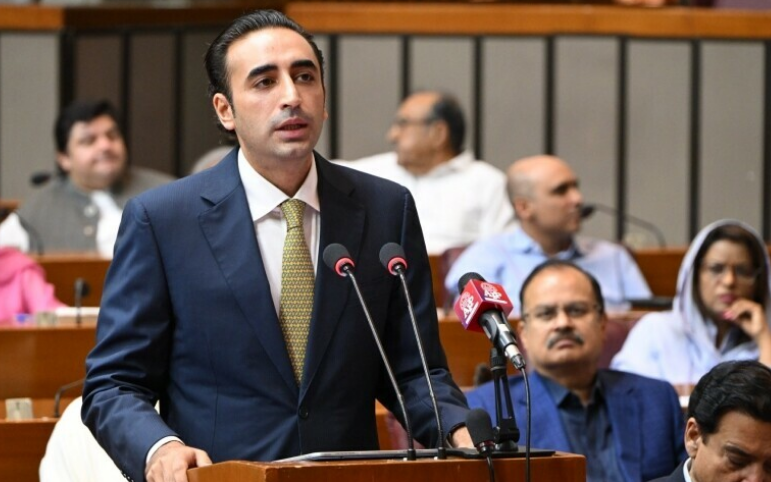
Islamabad (Web Desk): Pakistan People’s Party (PPP) Chairman and former foreign minister Bilawal Bhutto Zardari emphasized the urgent need for sustained dialogue between Pakistan and India, warning that a lack of communication increases the threat of terrorism and regional instability.
Speaking in the National Assembly, he stated that peace between the two nuclear neighbours is impossible without cooperation, especially on counterterrorism, and criticized India for weaponizing terrorism to harm Pakistan’s global standing.
He accused India of lobbying to reverse Pakistan’s removal from the FATF grey list, though he credited Pakistan’s foreign office and leadership for thwarting those efforts.
Bilawal said that maintaining a ceasefire alone is insufficient and that real peace must involve deeper understanding, especially among the youth of both nations.
He criticized Indian Prime Minister Narendra Modi’s “doctrine of escalation,” warning that any terrorist incident in India is used as an excuse for hostilities against Pakistan. He questioned what would happen if Pakistan adopted the same retaliatory approach, stating that Pakistan suffers more terrorist attacks, some allegedly linked to Indian involvement.
The PPP chief said stressed that Pakistan will not let terrorists dictate peace and that advocating peace also supports the Indian public, who are victims of Modi’s aggressive politics.
Bilawal warned India to honour the Indus Waters Treaty, calling any attempt to block Pakistan’s share of water illegal and potentially leading to war.
The former foreign minister affirmed that Pakistan’s armed forces are ready to respond decisively and reclaim all six rivers if provoked.
The PPP chief said that India was promoting a false narrative to brand Pakistan as a terrorist state, however he praised Islamabad’s diplomatic success in countering this image, particularly at the UN where Pakistan was chosen to chair key counterterrorism committees.
Bilawal condemned attempts to block Pakistan’s access to IMF assistance and claimed such efforts, both internal and external, had failed.
He said Pakistan has succeeded on fronts including water rights, diplomacy, terrorism, and the economy.
He hailed Donald Trump’s willingness to mediate on Kashmir as a diplomatic success for Pakistan and a setback for India. Despite Indian objections, he noted that US officials, including the State Department, acknowledged Trump’s offer, demonstrating international support for Pakistan’s position.
He criticized Israel for violating Iran’s sovereignty and likened Modi’s actions in Kashmir to Netanyahu’s policies in Gaza. He condemned US attacks on Iran’s nuclear facilities, warning of regional consequences.
Turning to domestic politics, Bilawal criticized former Prime Minister Imran Khan for calling Kashmir an internal matter and failing to respond effectively to India’s revocation of Article 370.
He highlighted Pakistan’s military response to recent Indian aggression and underscored that the Kashmir issue must be resolved through UN resolutions.
Bilawal also mentioned that Pakistan’s military leadership was warmly received in Washington, including a White House lunch hosted by President Trump for Field Marshal Syed Asim Munir.
He argued this disproves Indian claims of Pakistani military weakness and reflects growing international respect for Pakistan’s role in regional stability.
The former FM emphasized that despite India’s strategic ties with the US, Pakistan has gained bipartisan diplomatic engagement in Washington, with its narrative gaining traction at international forums while India’s disinformation is being exposed.
He warned that unresolved water disputes could trigger a long-term water war, urging diplomatic efforts to prevent generational conflict. He praised the government’s foreign policy and said true leadership lies in preventing crises.
Bilawal also highlighted the importance of addressing economic hardship alongside regional security, and called for resolving disputes through dialogue and diplomacy.
He welcomed the federal budget, commending increased defense spending and relief for salaried classes, especially raising the income tax exemption to Rs 1 million. He noted PPP’s ongoing demand for South Punjab to receive 30% of Punjab’s development funds, a goal not met in this budget but promised for future implementation.
He also stressed the importance of giving special financial consideration to Khyber Pakhtunkhwa and Balochistan as frontline regions in the fight against terrorism.
He expressed disappointment over the lack of progress in agricultural reforms and called for a joint national strategy to revive the agriculture sector, particularly in terrorism-affected provinces.
Bilawal proposed a national agricultural conference and recalled past PPP reforms that turned Pakistan into a food-exporting country through increased support prices. He argued that supporting domestic farmers is essential for economic survival.
Highlighting climate change and water shortages, he advocated for modernizing irrigation systems and moving from flood irrigation to water-efficient technology.
The former foreign minister warned that India’s violations of the Indus Waters Treaty are worsening Pakistan’s water crisis and called for collaboration between federal and provincial governments to adopt smart irrigation systems, which could also help cultivate arid areas like Cholistan and Thar.
He criticized the proposed 20% tax on solar panels, saying it would disproportionately affect low-income and remote communities.
Bilawal also opposed the halving of Sindh’s higher education budget, which was later restored after PPP’s protest. He urged all lawmakers to prioritize national interest and public welfare, especially the needs of farmers and vulnerable regions.
The former foreign minister concluded by expressing his party’s support for the federal budget, appreciating the economic direction and collaboration led by Prime Minister Shehbaz Sharif and Finance Minister Muhammad Aurangzeb.
Bilawal emphasized that PPP was consulted during the budget process and is satisfied with several policy measures aimed at economic recovery.
Neo News | Copyright © 2026