Thu, September 17, 2026

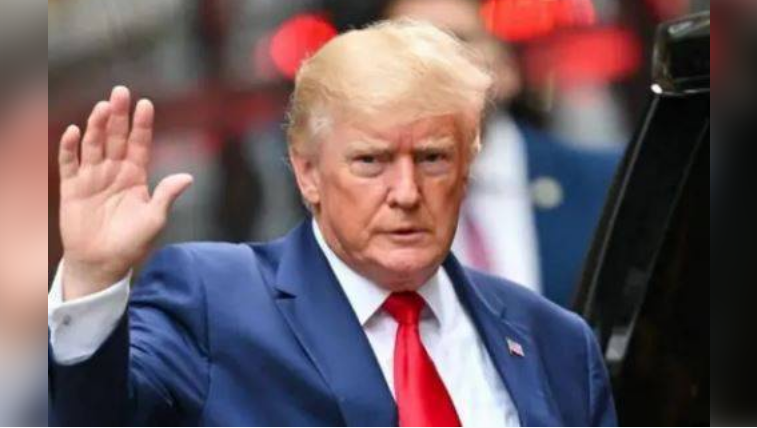
Washington (Web Desk): US President Donald Trump has unveiled what he describes as a “massive” trade agreement with Japan, just as China prepares to send its vice premier to upcoming trade negotiations in the US to finalize its own deal ahead of a looming deadline.
In a bid to reduce the vast American trade deficit, Trump has warned that if countries fail to finalize agreements with Washington by August 1, they will face stringent “reciprocal” tariffs.
The new pact with Japan, alongside a deal struck with the Philippines announced the same day, marks the fifth trade agreement secured by the Trump administration since pledging in April to deliver “90 deals in 90 days.” Other agreements include those with Britain, Vietnam, and Indonesia, with the latter easing restrictions on critical mineral exports.
While smaller nations have come to terms, talks with major US trading partners such as China, Canada, Mexico, and the European Union remain underway. Next week, representatives from the US and China will meet in Stockholm to attempt to reach an agreement before the August 12 deadline agreed upon in May. China announced that Vice Premier He Lifeng will participate in these discussions and emphasized a desire to “strengthen cooperation” with the US.
Trump took to his Truth Social platform to proclaim the Japan deal, saying it could be the largest ever made. He asserted that Japan would invest $550 billion into the US, with 90% of the resulting profits benefiting America, and that the arrangement would generate hundreds of thousands of jobs. However, specific details about this investment plan were not disclosed.
Prior to the agreement, Japanese exports to the US faced a 10% tariff, which was set to increase to 25% after August 1. Japan also faced 25% tariffs on automobiles—a sector employing roughly eight percent of the Japanese workforce—as well as steep 50% tariffs on steel and aluminum.
Under the new deal, the auto tariff has been reduced to 15%, prompting a surge in Japanese automakers’ stock prices, including Toyota and Mitsubishi, which both rose around 14%. The Nikkei index climbed 3.5%.
Japanese Prime Minister Shigeru Ishiba stated that this was the first global agreement to lower tariffs on automobiles and parts without limiting volume. He emphasized that the negotiations aimed to protect vital national interests for both countries.
However, Japan’s trade envoy, Ryosei Akazawa, confirmed that the 50% tariffs on steel and aluminum would remain in place. Contrary to speculation, the increased defense spending Trump advocated for was not included in the deal.
Trump also claimed Japan had agreed to open its markets wider to trade in vehicles, rice, certain agricultural products, and more. Rice is a particularly sensitive topic in Japan, and despite recent electoral setbacks for Ishiba’s government, which had opposed concessions, the deal allows Japan to import more US grain within the limits set by World Trade Organization rules.
Japan currently imports 770,000 tons of rice tariff-free under these commitments. Ishiba insisted that the agreement does not compromise Japan’s agricultural sector.
Tatsuo Yasunaga, chairman of the Japan Foreign Trade Council, welcomed the announcement but stressed the importance of reviewing the full details to understand the deal’s impact on businesses.
Public reaction was mixed: Naomi Omura, an 80-year-old voter, expressed disappointment that Japan did not take a firmer stance against the US, while 81-year-old Tetsuo Momiyama remarked that Ishiba’s political career was over and suggested it was an appropriate time for him to step down following the recent electoral losses.
Meanwhile, other major trading partners watch closely as the deadline nears. The Philippines’ deal, also revealed on Tuesday after a meeting between Trump and President Ferdinand Marcos, only saw a minor reduction in tariffs, dropping one percentage point to 19%. In response to the Japan-US deal announcement, China reiterated its support for “equal dialogue” in trade matters.
Earlier this year, Beijing and Washington engaged in escalating tit-for-tat tariffs that reached triple-digit levels. However, during talks in Geneva in May, both sides agreed to a temporary reduction of tariffs lasting until August 12, pending a final agreement.
Neo News | Copyright © 2026