Thu, September 17, 2026

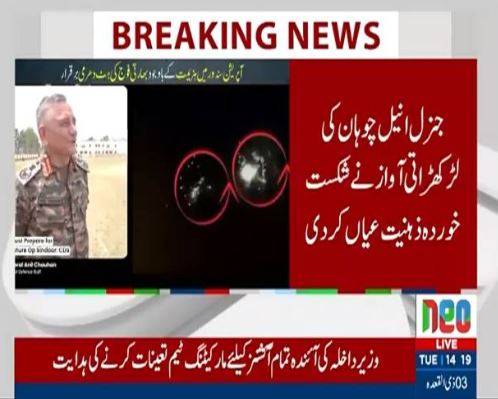
New Delhi (Web Desk): India’s Chief of Defence Staff (CDS), General Anil Chauhan, has drawn attention after remarks made during a recent event in New Delhi regarding “Operation Sindoor,” which analysts say reflect growing concerns within the Indian military establishment.
Speaking at the ceremony, General Chauhan acknowledged that the nature of future challenges will differ significantly from the past. He urged the armed forces to move beyond previous experiences and focus on preparing for upcoming scenarios. “The challenges ahead will be different; we need to move past the previous ‘Sindoor’ and prepare for the next,” he stated.
Observers noted that his tone and delivery suggested a cautious and reflective approach, with some interpreting his comments as an indirect acknowledgment of difficulties encountered during the operation.
According to defense analysts, such statements often indicate an effort by military leadership to manage internal morale while addressing operational shortcomings.
During his address, General Chauhan placed significant emphasis on the role of emerging and advanced technologies in modern warfare. He described technological advancement as a critical factor in ensuring preparedness against evolving threats.
However, several defense experts have expressed reservations, arguing that technology alone cannot compensate for gaps in strategy, coordination, and professional execution.
They stress that effective planning and leadership remain equally essential components of military success.
Analysts further suggest that the discussion around Operation Sindoor points to a broader reassessment within India’s defense framework. The military leadership, they say, appears to be under pressure to evaluate its operational strategies, identify weaknesses, and adapt to rapidly changing regional security dynamics.
The remarks have sparked debate among experts, with some viewing them as a necessary step toward institutional introspection, while others interpret them as an attempt to reframe past outcomes and shift focus toward future preparedness.
Neo News | Copyright © 2026