Thu, September 17, 2026

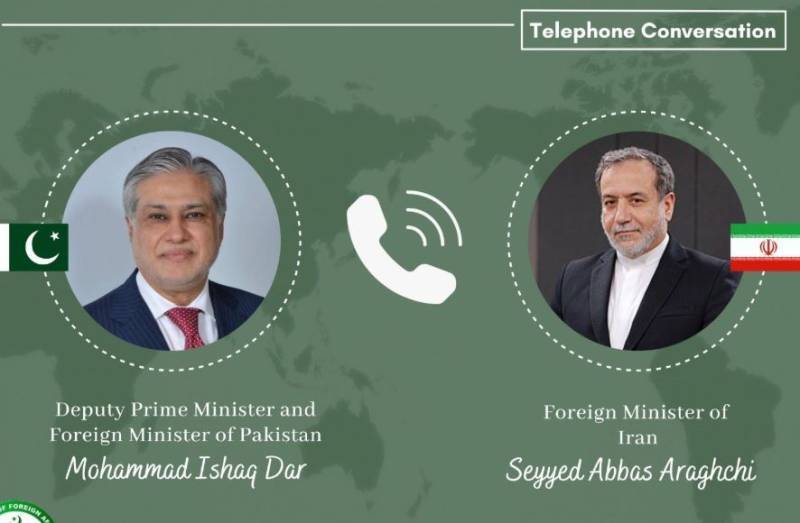
Islamabad (Web Desk): Deputy Prime Minister and Foreign Minister Ishaq Dar held a telephone conversation on Monday with his Iranian counterpart Abbas Araghchi, during which he underlined the need for sustained dialogue and ongoing diplomatic contact as efforts intensify around renewed Iran–United States (US) negotiations aimed at a potential peace settlement.
In a post shared on X, the Foreign Office confirmed that Dar had spoken to Araghchi and highlighted the importance of keeping diplomatic channels active.
“FM emphasised the importance of continued dialogue and engagement at the earliest to resolve all pending issues, in order to promote regional peace and stability. Both agreed to remain closely engaged.”
DPM/FM Senator Mohammad Ishaq Dar @MIshaqDar50 spoke with Foreign Minister of Iran, Abbas Araghchi @Araghchi.
— Ministry of Foreign Affairs - Pakistan (@ForeignOfficePk) April 20, 2026
DPM/FM emphasized the importance of continued dialogue and engagement at the earliest to resolve all pending issues, in order to promote regional peace and stability.… pic.twitter.com/yRLWLUf1pP
In a post on X, the Iranian government also confirmed that the two sides discussed regional developments and ceasefire-related issues, exchanging views on ongoing coordination.
FM @araghchi of Iran and Pakistan’s Deputy PM & FM @MIshaqDar50 held a phone call to discuss regional developments and ceasefire-related issues, exchanging views on ongoing coordination. #Iran #Pakistan #Diplomacy pic.twitter.com/qGqSapKy3X
— Government of the Islamic Republic of Iran (@Iran_GOV) April 20, 2026
It is pertinent to mention that Islamabad is gearing up to host the second round of Iran–US talks after Washington confirmed that a senior delegation led by US Vice President JD Vance would be visiting Pakistan for the next phase of discussions.
Pakistan has stepped forward as a key facilitator in this sensitive diplomatic effort, presenting itself as reliable communicator between the two sides at a time when Washington and Tehran remain sharply divided.
The earlier round of talks had revealed significant differences, particularly over sanctions, maritime security concerns, and broader regional influence.
Despite these sticking points, officials indicate that communication lines have remained open, even as public rhetoric from both sides has hardened ahead of the upcoming negotiations.
Neo News | Copyright © 2026