Thu, September 17, 2026

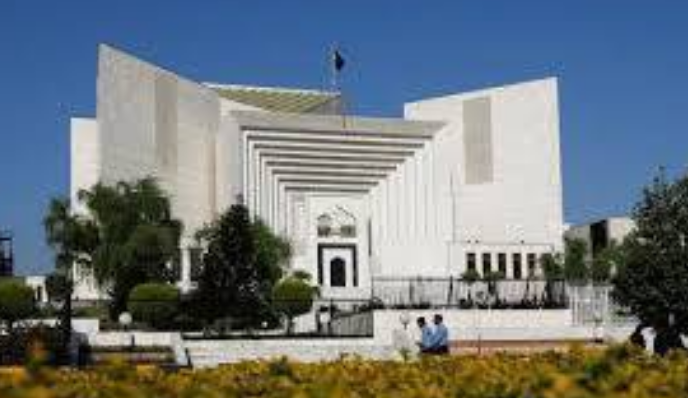
Islamabad (Web Desk): The Supreme Court (SC) on Thursday dismissed the petitions challenging the recent transfers of judges, declaring them constitutional through a majority decision.
The judgment was issued by a constitutional bench of the Supreme Court, which had earlier reserved its verdict after hearing detailed arguments from all sides.
In a 3-2 majority ruling, the bench upheld the legality of the transfers and affirmed that no constitutional provision had been violated in the process.
Justices Muhammad Ali Mazhar, Shahid Bilal, and Safdar Ali Shah Panwar formed the majority opinion, holding that the transfer of judges does not contravene the Constitution.
Justice Muhammad Ali Mazhar, who delivered the majority verdict on behalf of the bench, stated that the concerns raised by the petitioners did not hold constitutional weight.
The court also ruled that Justice Sarfraz Dogar would continue to serve as the acting chief justice of the Islamabad High Court, a position that had been at the centre of much controversy.
The transfers had attracted widespread attention from legal experts and political commentators, many of whom questioned the transparency and procedural integrity of the decision.
The petitioners, including prominent lawyer Hamid Khan, argued that the transfers were conducted in an unusually hasty manner and lacked the necessary procedural safeguards.
Khan stressed that transfers of high court judges should be made with great care and through meaningful consultation.
During the hearings, Justice Muhammad Ali Mazhar noted that in India, a judge's consent is not required for transfers, and decisions are made in consultation with the Chief Justice.
However, he emphasized that in Pakistan, the judge’s consent is constitutionally necessary.
Justice Naeem Akhtar Afghan added that India’s judiciary functions within a unified cadre system, which is not the case in Pakistan, where no single seniority list exists for high court judges.
Justice Shakeel Ahmad echoed this by pointing out that Indian high court judges are ranked under one seniority framework, highlighting the structural difference between the two judicial systems.
Hamid Khan further argued that the Chief Justice of Pakistan (CJP) did not engage in meaningful consultation during the process, and alleged that the real purpose behind the transfers was to install Justice Sarfraz Dogar in a key role, while the transfer of the other two judges was only a pretext. He accused the authorities of misusing Article 200 to exert influence over the judiciary.
Meanwhile, Advocate Idrees Ashraf, representing the founder of Pakistan Tehreek-e-Insaf (PTI), pointed out that the official notifications for the transfers failed to mention any specific duration.
He argued that transferring judges without defined terms could lead to divisions within the high court and foster a perception of discrimination among judges.
The lawyer emphasized that all judges should be treated equally to maintain the credibility and unity of the judiciary.
Neo News | Copyright © 2026