Thu, September 17, 2026

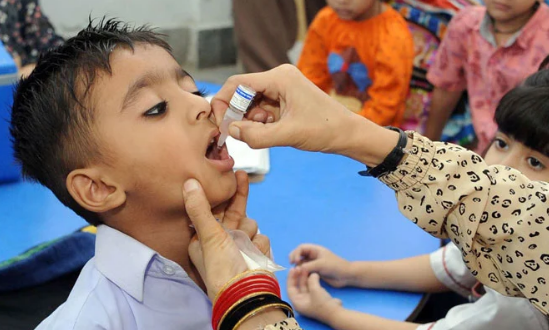
Islamabad (Web Desk): The Government of Pakistan, through the National Emergency Operations Centre (NEOC) for Polio Eradication, has initiated a large-scale sub-national vaccination campaign in 79 high-risk districts as part of ongoing efforts to eliminate poliovirus and protect children from permanent disability caused by the disease.
The campaign, scheduled from May 18 to May 24, seeks to administer oral polio vaccine drops to nearly 19 million children below the age of five. Authorities say the vaccine remains a safe and reliable tool in preventing the spread of the virus.
To carry out the operation, more than 160,000 trained frontline workers have been mobilized across the country. These teams will visit homes directly to ensure that every eligible child is vaccinated during the week-long drive.
The immunization effort is taking place simultaneously in Pakistan and Afghanistan, demonstrating stronger cooperation between the two neighboring countries in their joint mission to stop poliovirus transmission in one of the few regions of the world where the disease still exists.
Under the campaign plan, Punjab’s 10 selected districts will target around 6.19 million children, while 20 districts in Sindh aim to vaccinate approximately 5.79 million children. In Khyber Pakhtunkhwa, the drive will cover 23 districts with a target of 4.61 million children, whereas 25 districts in Balochistan are expected to vaccinate nearly 1.99 million children. More than 460,000 children in Islamabad are also included in the campaign.
Pakistan has made significant gains in its battle against polio over the past three decades. When the national eradication programme began in 1994, the country was recording over 20,000 cases every year. Since then, continuous vaccination campaigns, stronger disease surveillance and coordinated health measures have sharply reduced the number of infections nationwide.
Officials say the latest figures further reflect this progress. Pakistan reported 31 polio cases in 2025, while only three confirmed infections have been detected so far in 2026, indicating steady advancement toward complete eradication.
Despite the encouraging decline in cases, health authorities warned that the virus continues to circulate unnoticed in certain areas, making regular immunization campaigns critically important.
In a statement, the NEOC said Pakistan is currently at a crucial stage in its journey toward becoming polio-free, adding that every child left unvaccinated gives the virus a chance to survive and spread further.
Health experts also underlined the need for repeated vaccination, explaining that every additional dose strengthens immunity and plays an important role in interrupting transmission, especially among high-risk and mobile populations.
The Government of Pakistan also recognized the ongoing support of Global Polio Eradication Initiative partners, including the World Health Organization (WHO), UNICEF, CDC, Rotary International and the Gates Foundation, along with provincial administrations, frontline health workers, security personnel, community elders and local partners whose combined efforts continue to support the campaign.
Parents and caregivers have been urged to cooperate with vaccination teams and ensure that every child under the age of five receives polio drops during the campaign period.
The NEOC reaffirmed its determination to achieve a polio-free Pakistan through consistent vaccination efforts, expanded outreach and collective national commitment.
Neo News | Copyright © 2026