Thu, September 17, 2026

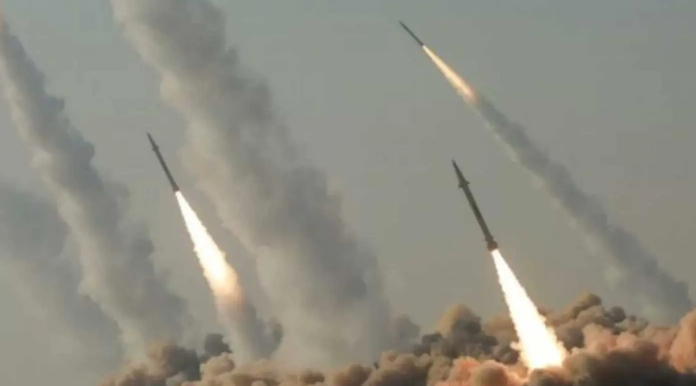
Washington/Tehran (Web Desk): The United States (US) and Iran exchanged another round of military attacks, sharply raising tensions across the Gulf and throwing the Strait of Hormuz into renewed uncertainty as both countries stepped up their operations.
The latest escalation has fuelled fears of a broader regional war while increasing concerns over fresh disruptions to global oil supplies.
The renewed hostilities have effectively dismantled the fragile ceasefire reached last month, replacing it with an escalating cycle of retaliation.
The fresh exchange of strikes has interrupted shipping activity through the Strait of Hormuz and intensified worries that the conflict could spread further across the Middle East.
Washington said its latest military campaign focused on strategic Iranian positions on Qeshm Island and in the vicinity of Bandar Abbas, the country's largest commercial port, which also serves as a key base for Iran's navy and the Islamic Revolutionary Guard Corps (IRGC).
According to the US Central Command (CENTCOM), fighter aircraft, drones and naval vessels conducted coordinated precision strikes against dozens of military targets, including coastal monitoring systems, air defence sites, logistics facilities and maritime assets.
US officials said the operation was aimed at further weakening Iran's military capabilities and reducing its ability to threaten commercial navigation in regional waters.
— U.S. Central Command (@CENTCOM) July 17, 2026
Iranian media, however, reported that the attacks also inflicted extensive damage on civilian infrastructure. Five bridges, Bandar Khamir railway station and Iranshahr Airport in southeastern Iran were among the sites reportedly hit.
Iran's state-run news agency IRNA said seven people lost their lives after bridges in the southern port city of Bandar Khamir were struck.
In response, Tehran announced that it had launched missiles and drones against US military facilities across the Gulf, including bases in Bahrain and Kuwait. Iranian forces also targeted an American air base in Jordan.
In Qatar, residents of Doha reported hearing several explosions overnight, while local authorities confirmed that a child was injured after being hit by shrapnel.
As military action intensified, commercial traffic through the Strait of Hormuz faced severe disruption once again, heightening fears of prolonged instability and driving international oil and gas prices upward.
Iran reinstated restrictions on maritime movement through the strategically important waterway, while the United States tightened its blockade around Iranian ports.
Tehran also warned that if Washington broadened its attacks on Iranian infrastructure, it could encourage Yemen's Houthi movement to strike the Bab al-Mandeb Strait, another vital shipping route connecting the Red Sea to the Gulf of Aden.
Reports further indicated that Iranian forces targeted vessels travelling within a designated shipping corridor in the Strait of Hormuz last week, deepening international concerns over the safety of global maritime trade.
White House Press Secretary Karoline Leavitt accused Tehran of undermining freedom of navigation and warned that President Donald Trump would not allow continued attacks on commercial shipping to go unanswered.
The dispute has increasingly centred on control of the Strait of Hormuz. Iran maintains that commercial vessels should pass through channels close to its coastline and plans to introduce transit charges after a 60-day negotiation period outlined in a memorandum agreed upon last month.
The US has instead advised commercial ships to use alternative routes closer to Oman's coastline.
American officials said the latest strikes specifically targeted Iran's coastal military infrastructure in an effort to reduce its ability to control the narrow but strategically crucial waterway.
Despite the growing military confrontation, Washington insists diplomatic engagement with Tehran has not been abandoned.
The White House press secretary said that communication between the two countries remains ongoing even as both sides continue exchanging military strikes, adding that the Trump administration remains prepared to pursue negotiations while responding forcefully to attacks against US interests and international shipping.
Neo News | Copyright © 2026