Thu, September 17, 2026

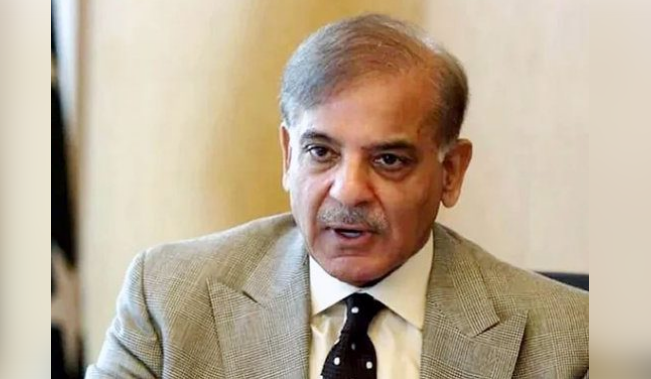
Vienna (Web Desk): Prime Minister Shehbaz Sharif has urged the world to recommit to sustainable and inclusive development, describing it as the essential path to lasting peace and shared prosperity in an era of overlapping global crises.
Speaking at a special United Nations (UN) event titled “Sustainable Development: Pathway for Global Peace and Prosperity,” he cautioned that geopolitical tensions, climate shocks, and technological disruptions are combining to create unprecedented instability.
“The greatest risk we face today is not one single threat, but the collision of many,” the prime minister said, highlighting how poverty, debt burdens, mass displacement, and unresolved conflicts are fueling global fragility.
PM Shehbaz stressed that true sustainable development must be inclusive. “We cannot call development sustainable if millions are left behind,” he noted.
He pointed out that developing nations, despite contributing least to greenhouse gas emissions, bear the heaviest costs from climate change, economic instability, and debt crises.
Pakistan, he said, produces less than one percent of global emissions yet suffers disproportionately from climate-induced disasters.
He recalled the catastrophic floods of 2022, which claimed thousands of lives, destroyed crops and infrastructure, and displaced millions, noting that subsequent floods have compounded the nation’s challenges.
“These disasters strike at the very heart of human security,” he said, emphasizing the need for fairness and justice in development.
Reaffirming Pakistan’s dedication to the Sustainable Development Goals (SDGs), the prime minister said the government has woven them into national development plans, focusing on education, healthcare, food security, social protection, and opportunities for women and youth.
He highlighted that Pakistan’s large youth population presents both a challenge and an opportunity, calling for investments in skills, digital transformation, and stronger institutions to empower the next generation.
Despite facing aggression and violations of international commitments, he underscored Pakistan’s unwavering support for dialogue, diplomacy, and multilateralism as the best way to prevent conflict.
He also called for reforms to strengthen the UN system and its ability to promote global peace and cooperation.
Speaking on Vienna’s strategic role, he noted that the city hosts key institutions dealing with counter-terrorism, crime prevention, industrial development, and the peaceful applications of nuclear technology and outer space.
Pakistan, he added, highly values its engagement with the International Atomic Energy Agency (IAEA), United Nations Industrial Development Organization (UNIDO), United Nations Office on Drugs and Crime (UNODC), and other Vienna-based organizations and remains committed to supporting their work.
The prime minister also highlighted the importance of knowledge sharing, capacity building, and technology transfer, cautioning that emerging fields like artificial intelligence and biotechnology must serve all humanity rather than an elite few.
“If digital divides remain unaddressed, they will become entrenched development divides,” he warned, urging global efforts to tackle the root causes of challenges rather than simply their consequences.
Following his address, Shehbaz Sharif attended a ceremony marking the signing of the UNIDO Programme for Country Partnership (PCP) Pakistan 2025–2030, the UNODC Country Programme Pakistan, and a cooperation agreement between the Institute of Nuclear Medicine and Oncology Lahore (INMOL) and the IAEA.
Deputy Prime Minister and Foreign Minister Ishaq Dar reiterated Pakistan’s firm commitment to the UN Charter and recognized the critical role of the United Nations in fostering peace, security, sustainable development, and human rights.
He highlighted Pakistan’s constructive engagement with Vienna-based UN bodies, praising the IAEA’s role in promoting peaceful nuclear technology and emphasizing collaboration with UNODC to strengthen rule of law and curb crimes that drain development resources.
Dar also described UNIDO’s contribution as vital to advancing inclusive industrialization, reducing poverty, generating employment, and building cleaner, more resilient industries.
IAEA Director General Rafael Mariano Grossi praised Pakistan’s nuclear infrastructure, including the Chashma unit under construction, and reaffirmed his commitment to enhancing bilateral collaboration.
UNIDO Deputy Director-General Yuko Yasunaga stressed Pakistan’s vulnerability to climate impacts despite its minimal emissions contribution and highlighted the inseparable link between climate resilience and economic resilience.
He emphasized the necessity of developing low-carbon technologies to protect livelihoods, foster growth, and strengthen social cohesion.
Neo News | Copyright © 2026