Thu, September 17, 2026

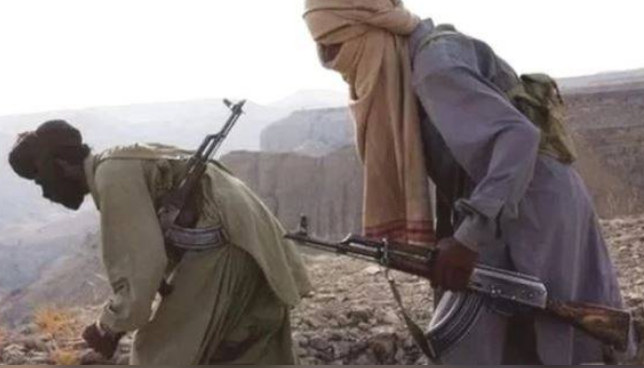
Islamabad (Web Desk): An investigative article published by the American journal RealClearWorld has highlighted a significant shift in understanding the Balochistan Liberation Army (BLA), portraying it as more than just a separatist faction. According to the investigation, the group now functions as a well-structured and highly dangerous terrorist organization.
The article, penned by former US military officer and defense expert Joe Bucchino, warns that continuing to describe the BLA simply as a separatist movement no longer reflects reality. Analysts cited in the report explain that while the organization originally emerged from political frustrations, it has evolved into a modern terrorist network with organized operations and serious security implications.
In recent years, the BLA has shifted its focus to directly targeting civilians and critical infrastructure.
The article highlights the attacks in Balochistan on January 31, 2026, in which dozens of ordinary citizens and security personnel lost their lives.
The group is now largely disconnected from the legitimate concerns of the local population, seeking instead to sow chaos and disrupt Pakistan’s developmental projects.
Surveys and political studies suggest that the majority of Baloch people are less concerned with separatism than with economic opportunity, government inefficiency, corruption, inadequate public services, and insecurity.
Polls conducted by Gallup Pakistan and PILDAT indicate that the population prioritizes political inclusion and improved access to resources over independence. Most Baloch identify as Pakistani, and political leaders are seeking solutions through constitutional and economic reforms rather than secession.
Initially, the BLA confined its attacks to military and security targets. Over the past decade, however, it has escalated its tactics to include suicide bombings, coordinated assaults across multiple cities, train hijackings, and deliberate attacks on schools, buses, and public institutions. Semi-autonomous units such as the Majeed Brigade and Fateh Squad have facilitated these operations.
The article also notes that the BLA generates funding through kidnappings, ransom, smuggling, and other illicit enterprises.
It collaborates opportunistically with other ideological terrorist groups, reflecting immediate strategic goals rather than any enduring political manifesto. Its attacks on projects related to the China-Pakistan Economic Corridor (CPEC), Chinese nationals, and key economic installations demonstrate that the BLA has become a tool for regional actors pursuing broader strategic interests.
Labeling the BLA as a “separatist movement” is now inconsistent with reality. It functions as a terrorist organization that exploits a political narrative to legitimize its violence. While the legitimate grievances of the Baloch people remain real and pressing, the actions of the BLA continue to obstruct meaningful solutions.
The analyst argues that the BLA’s operations are a serious obstacle to resolving the legitimate concerns of the Baloch population, emphasizing that the organization represents a far greater threat than conventional separatist groups in Pakistan.
Neo News | Copyright © 2026