Thu, September 17, 2026

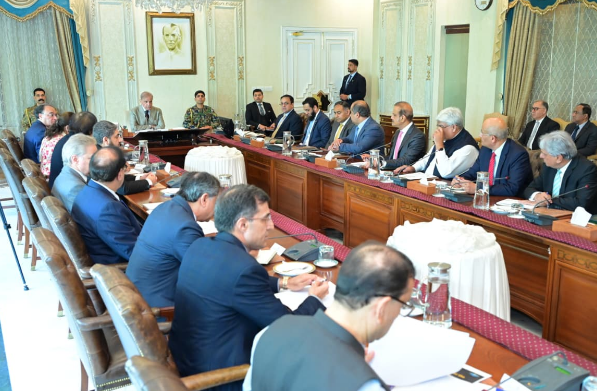
Islamabad (Web Desk): Prime Minister Shehbaz Sharif on Wednesday underscored the vital role of Pakistan’s business community, calling it the foundation of the national economy and reaffirming the government’s commitment to providing every possible support to help industries expand production and increase exports.
While presiding over a meeting to assess the performance and ongoing reforms of the Federal Board of Revenue (FBR), the prime minister instructed the tax authority to strengthen its engagement with traders and industrialists.
He directed FBR officials to address the business community’s genuine concerns without delay and ensure that their issues receive immediate attention.
To improve coordination between the tax authority and businesses, Shehbaz Sharif ordered senior FBR officers to travel to Karachi during the first week of every month. The visits, he said, should enable direct interaction with the business sector and facilitate the timely settlement of tax-related matters.
The prime minister expressed confidence that Pakistan’s economy had entered a more stable phase, saying the current year was expected to bring stronger economic growth along with greater commercial and industrial activity across the country.
He also announced that businesses consistently fulfilling their tax obligations would be formally acknowledged and encouraged in recognition of their positive contribution to the national economy.
Reiterating the government’s economic priorities, Shehbaz Sharif said efforts were focused on creating a more business-friendly environment by simplifying tax procedures, improving transparency, attracting investment, and boosting exports. He stressed that these measures would help strengthen the confidence of the private sector.
During the meeting, officials presented a briefing on the FBR’s overall performance and the progress achieved under its reform programme.
Participants were informed that production monitoring systems had already been implemented in the sugar, cement, tobacco, tiles, and fertilizer sectors, while similar systems were currently being introduced in the textile and beverages industries.
According to the briefing, enhanced production monitoring in the sugar sector generated an additional Rs42 billion in tax revenue during the past year.
The cement industry contributed another Rs38 billion through the same mechanism, while the beverages sector added Rs15 billion in extra tax collections over the corresponding period.
The meeting was attended by Law and Justice Minister Azam Nazeer Tarar, Economic Affairs Minister Ahad Khan Cheema, Finance and Revenue Minister Muhammad Aurangzeb, Information and Broadcasting Minister Attaullah Tarar, Information Technology and Telecommunication Minister Shaza Fatima Khawaja, Minister of State for Finance and Railways Bilal Azhar Kayani, Special Assistant to the Prime Minister Haroon Akhtar, State Bank of Pakistan Governor Jameel Ahmad, along with other senior government officials.
Neo News | Copyright © 2026