Thu, September 17, 2026

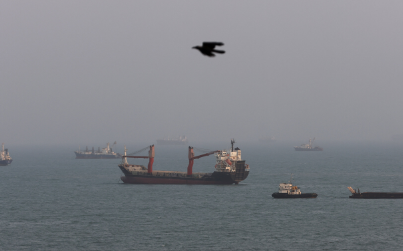
Tehran (Web Desk): Iran on Saturday dismissed US President Donald Trump’s suggestion that he could designate the Strait of Hormuz as US territory, insisting that authority over the strategic waterway remains with Iran.
Iranian Deputy Foreign Minister Kazem Gharibabadi said in a post on X that Washington had no legal or political basis to claim ownership of the strait, which has emerged as one of the central points of tension during the nearly six-month-long conflict.
“The Strait of Hormuz has been Iranian, is Iranian, and will remain Iranian,” he wrote in a post translated from Persian to English. “This strait will only be closed and opened under Iran’s command.”
Gharibabadi further said Iran would continue enforcing its blockade of the vital maritime route until the United States acknowledges what he described as its defeat and abandons what he called its unrealistic expectations.
The dispute followed remarks by Trump during an address at a police academy in New York on Friday, where he said the United States could soon take formal control of the Strait of Hormuz. The waterway is currently subject to the jurisdictions of both Iran and Oman.
“Pretty soon, I will be declaring the Hormuz Strait a territory of the United States,” he said.
Trump, who has ordered two US naval blockades of the waterway during the conflict, has also repeatedly claimed that Washington has effective control over the strait.
“We have control over it. Nobody else. Only us. Our Navy is unbelievable, and things are going great for our country,” he told reporters Tuesday.
Trump’s position has faced criticism from several observers. Former US diplomat Richard Haass argued that the Strait of Hormuz is not controlled by any single country, while Fox News host Bret Baier noted that maritime movement through the passage had been reduced “to a trickle” despite Trump’s assertion of US control.
Before the war began on February 28, 2026, the Strait of Hormuz handled around 20 percent of global oil and gas shipments, making it one of the world’s most important energy corridors.
However, shipping activity has fallen dramatically since Iran moved to shut the passage after the United States and Israel launched their initial attacks. The disruption has contributed to a sharp increase in international energy prices.
According to shipping intelligence company Kpler, only six vessels passed through the strait last weekend, compared with the approximately 130 to 140 ships that normally crossed the waterway each day before the conflict.
Neo News | Copyright © 2026