Thu, September 17, 2026

By: Maham Fazal
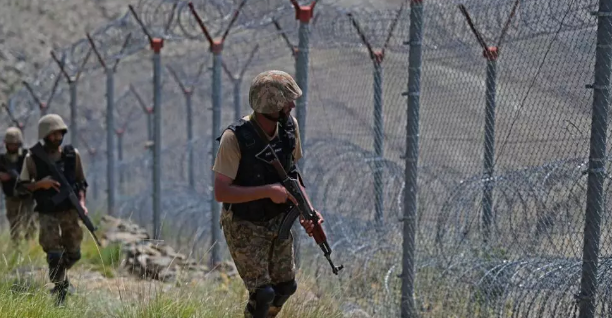
On September 13 in South Waziristan, twelve soldiers were martyred during an exchange of fire with militants, as confirmed by the military. In late June, a suicide attack in North Waziristan claimed thirteen security personnel. These losses are not isolated. They are the cost of decades in which policy blurred the lines between statecraft and militancy.
The story begins in the 1980s, when General Zia ul Haq placed Pakistan at the vanguard of the anti-Soviet jihad. Washington supplied money and arms, Riyadh mobilised clerical networks, and the ISI channelled support to the mujahideen. Zbigniew Brzezinski was photographed with fighters and praised them as freedom warriors. The Soviet retreat was celebrated as victory, yet the infrastructure of militancy remained intact. Networks were entrenched, ideology was sanctified, and violence became familiar.
As Afghanistan fell into civil war, Islamabad backed the Taliban. Ahmed Rashid recorded how the movement was seen in Islamabad as strategic depth against India and the Northern Alliance. The wager secured leverage in Kabul for a time. It also normalised the use of militant leverage as an instrument of policy. When Hamid Karzai and later Ashraf Ghani assumed office, Kabul tilted towards Delhi. India widened its presence through roads, training and diplomacy, while Afghan leaders accused Pakistan of harbouring insurgents. Kabul turned into a platform for pressure and a theatre of suspicion.
After 9/11, Pakistan promised cooperation with Washington. The commitment was partial. Al Qaeda was hunted, certain sectarian outfits were constrained, but the Afghan Taliban were tolerated. The logic was familiar; they were still seen as a counterweight to India. From that ambiguity grew the Tehreek e Taliban Pakistan. Unlike the Afghan Taliban, the TTP turned its guns on the Pakistani state, and from Swat to the tribal districts the country learned the price of selective choices.
The reckoning is visible today. In recent weeks soldiers have fallen in ambushes and at border posts, while official statements and independent reporting alike describe how sanctuaries across the frontier enable the TTP to regroup. Pakistan’s foreign office in 2020 laid out financial and logistical trails that link Indian agencies to anti state groups, including the TTP and the Balochistan Liberation Army.
Western accounts have described the porousness that lets networks survive. The return of the Taliban in Kabul has not removed the problem. Sanctuaries persist, sympathies remain visible, and attacks continue.
The thread that links past to present is unbroken. The jihad that Washington and Riyadh once endorsed produced forces that did not fade. The Taliban project, nurtured as strategic depth, has become a liability. India has exploited the space with covert support to proxies. What once looked like tactical advantage now reads as strategic erosion. The ghosts of past choices still walk our frontiers
For Pakistan the imperative is clear. There can be no distinction between so called good and bad militants. Ambiguity has been lethal. A doctrine of zero tolerance must be enforced in practice, not merely in statements. Border management must be uncompromising. Engagement with Kabul must rest on verifiable commitments rather than assumptions. Foreign policy must sharpen to meet the world as it is, not as we wish it to be.
The sacrifices of soldiers deserve more than ritual condolences. They demand honesty about the legacy of double games, courage to discard failed doctrines, and clarity to uphold a single national standard against all armed groups. National security cannot be managed through ambiguity. It must be built on coherence, or it will collapse under its contradictions.
Disclaimer: The views and opinions expressed in this article are solely those of the author and do not necessarily reflect the official policy or position of neo news.pk
Neo News | Copyright © 2026