Thu, September 17, 2026

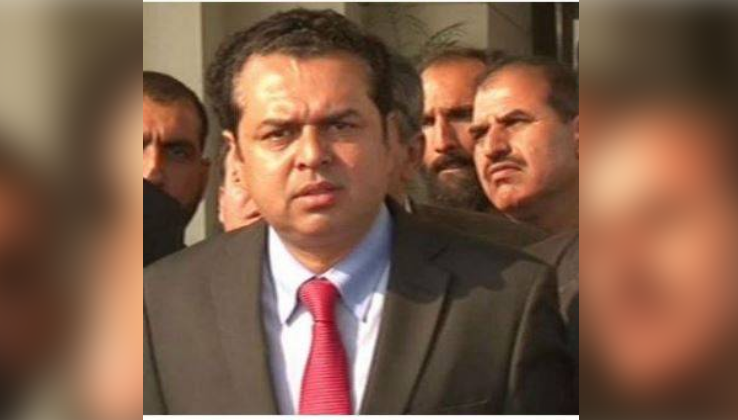
Islamabad (Web Desk): Senator Talal Chaudhry, Pakistan’s State Minister for Interior, delivered a stern warning on Monday, declaring that any political leader, whether a chief minister or party office-bearer, who speaks ambiguously or shows sympathy toward militants will face uncompromising action.
He emphasised that the state would not tolerate even the slightest hint of deviation from the national counter-terrorism stance.
Speaking to reporters outside Parliament, the minister said that political parties were free to conduct street protests and campaigns.
However, he stressed that no one would be permitted to create a space for militants responsible for indiscriminate attacks on mosques, seminaries, markets, schools, children, and security personnel.
“If someone wants to adopt a soft stance or build a narrative for them, that is unacceptable,” he said. “If your sympathy for these elements is so strong, you should go to Afghanistan — or we can facilitate it.”
The minister then strongly criticised the Khyber Pakhtunkhwa (KP) government, accusing it of deliberately weakening counter-terrorism structures in the province despite it suffering the highest number of militant attacks.
He said terrorism had claimed over 1,200 lives, with 60 to 70 percent of incidents occurring in KP during 2025 — marking the highest toll in Pakistan’s history.
Chaudhry also pointed out glaring gaps in the province’s security infrastructure, claiming that more than half of KP’s districts still lacked a Counter-Terrorism Department (CTD), Safe City systems remained unestablished, only about a quarter to a third of surveillance cameras had been installed in Peshawar, many of them incomplete, and no forensic laboratory had been built.
“You have intentionally avoided investing in counter-terrorism institutions,” he alleged, accusing provincial leaders of exploiting an ambiguous narrative for political gain.
He added that disorder served those seeking to weaken the state. “They believe that the more chaos there is, the weaker the state becomes, making it easier to pressure. That is why letters are sent to the IMF and lobbying is done abroad,” Chaudhry said.
Responding to questions about KP’s electoral mandate, he clarified that provincial powers did not extend to foreign affairs, defence, internal security, or border management.
“Their responsibilities lie in health, education, and law and order. They cannot decide Pakistan’s diplomatic relations,” he explained.
The minister also rejected allegations that the federal government had neglected KP, noting that he and the prime minister had visited the province multiple times.
He said counter-terrorism meetings were held twice a month at the Interior Ministry and chaired by the prime minister every month or two, but the KP chief minister had consistently failed to attend.
Talal Chaudhry added that a detailed briefing on the federal Counter-Terrorism Drive, which encompasses nearly two dozen key benchmarks, would soon be shared with journalists.
He contrasted Punjab’s progress — which had implemented Safe City systems in every district and at the tehsil level — with KP’s slow pace.
Reiterating the government’s hardline position, the minister stated that there was no room in Pakistan for terrorism or those who sympathised with militants. “Anyone supporting terrorists will face the same treatment as the terrorists themselves,” he said firmly.
“No one will be allowed to play with Pakistan’s blood, whether through weapons or narratives,” Talal Chaudhry said.
Neo News | Copyright © 2026