Thu, September 17, 2026

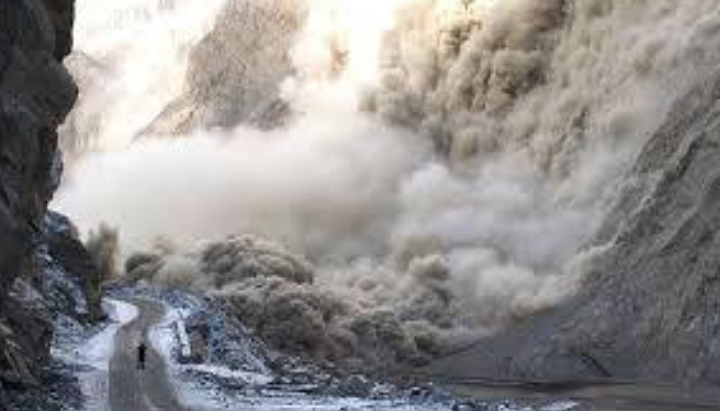
Gilgit (Web Desk): A devastating landslide claimed the lives of at least eight volunteers and left several others inured in Gilgit’s Danyor Nullah on Monday, as they worked to repair a water channel damaged by recent flooding.
According to police reports, the group was engaged in restoration efforts when a massive section of earth suddenly gave way, burying the team beneath tons of debris.
Local hospital sources confirmed that all those who lost their lives were part of a community-based volunteer unit.
Three others were rescued with injuries. Rescue operations are continuing as authorities search for more survivors, and emergency protocols have been activated at nearby medical facilities to handle the crisis.
Officials have linked the disaster to the ongoing effects of climate change, particularly the rapid melting of glaciers in the region. A government spokesperson highlighted that increased glacial melt has significantly raised water levels in several streams, contributing to the instability of slopes and channels.
Just days earlier, a surge from the Shishper glacier caused widespread flooding, damaging agricultural lands and cutting off a vital segment of the Karakoram Highway (KKH) leading to Hunza.
Traffic is now being redirected via the Nagar route to maintain access. Meanwhile, in the Morkhun area of Upper Hunza, river erosion—exacerbated by the increased water flow—has destroyed a key portion of the KKH, effectively severing the overland trade and travel route between Pakistan and China.
Provincial authorities confirmed the destruction and said efforts are underway to restore the route on an urgent basis, as ordered by Chief Minister Haji Gulbar Khan.
Elsewhere, meteorological and disaster management officials are warning of more rainfall and potential landslides across multiple regions. Areas at high risk include parts of Khyber Pakhtunkhwa, Gilgit-Baltistan, Murree, Galiyat, and Kashmir.
There are also alerts for possible flash floods in streams and nullahs in Dera Ghazi Khan, northeastern Balochistan, Punjab (including Rawalpindi and Islamabad), as well as in Chitral, Swat, Shangla, Mansehra, Kohistan, Abbottabad, and surrounding districts.
As weather conditions remain volatile, authorities continue to monitor the situation closely, urging residents in vulnerable zones to take precautionary measures.
The recent tragedies serve as stark reminders of how deeply climate change is reshaping life in the mountainous regions of Pakistan.
Neo News | Copyright © 2026