Thu, September 17, 2026

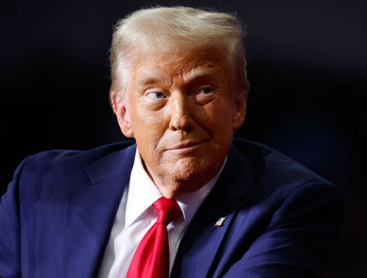
Washington (Web Desk): US President Donald Trump said on Tuesday that negotiations aimed at securing a peace settlement in the Middle East were in their “final throes,” following a brief easing of hostilities between Iran and Israel after fresh exchanges of fire that had threatened to escalate into a broader conflict.
Speaking to journalists after attending an NBA Finals game, Trump claimed that both countries had agreed, through his mediation, to halt their recent escalation. He suggested that a comprehensive understanding could be reached very quickly, saying the process could be completed in “two or three days,” even though diplomatic efforts have repeatedly faced setbacks in recent months despite an earlier ceasefire taking effect on April 8.
Despite the apparent diplomatic momentum, tensions on the ground remain fragile. Iran and Israel have continued to issue warnings and carry out limited strikes, even after the latest pause in direct confrontation. Iranian forces had fired missiles toward Israel on Sunday, prompting retaliatory action from Israel. Tehran later announced it was halting military operations, while Israeli Prime Minister Benjamin Netanyahu said the situation on that front had been brought under control.
However, the underlying confrontation remains unresolved. Iran has insisted that any agreement must also take into account developments in Lebanon, where Israel has intensified operations against Hezbollah, the Iran-aligned militant group. In response to continued cross-border fire, Iran warned it could resume attacks if Israeli strikes persist, while Netanyahu cautioned that Israel would respond forcefully to any renewed Iranian aggression.
Israeli Defence Minister Israel Katz maintained that military operations in southern Lebanon would continue regardless of external pressure and said Israeli forces would target Beirut’s southern suburbs in response to attacks originating from Hezbollah positions in northern Israel.
Trump, who has reportedly become increasingly frustrated with Netanyahu’s approach, has urged both sides to halt military action and allow diplomatic efforts to proceed. According to Axios, he also directly contacted Netanyahu after reports emerged that Israel was preparing a large-scale strike on Iranian targets. Trump warned the Israeli leader to exercise caution, reportedly telling him he could soon find himself without US backing.
Israeli Prime Minister Netanyahu, meanwhile, stated in a televised address that he had informed Trump Israel retained the right to self-defence and was acting accordingly.
US Vice President JD Vance also acknowledged on Fox News that while the United States and Israel share many strategic objectives, their positions do not always fully align, noting that differences can arise in certain situations.
According to Israeli military figures, Iran fired nearly 30 missiles toward Israeli territory, while Israel responded with strikes on military installations inside Iran. Despite the intensity of the exchange, no casualties were reported on either side.
Violence, however, continued in southern Lebanon, where Israeli airstrikes reportedly killed at least 14 people on Monday, according to Lebanon’s health ministry. The Israeli military said projectiles were fired toward its forces operating in the south, some of which were intercepted, while another landed near troops without causing injuries. It also reported intercepting a “suspicious aerial target” launched from Yemen.
While the risk of escalation persisted, daily life in some areas showed signs of relative calm. Tehran appeared less tense on Monday, with cafés remaining open and moderately busy, though traffic was lighter than usual and fuel stations saw queues. In contrast, residents in Tel Aviv again rushed to shelters as air raid sirens sounded.
Iranian media reported early Tuesday that Tehran’s international airport, which had been closed during the missile exchanges, had reopened and was receiving flights carrying Hajj pilgrims from Saudi Arabia.
The wider conflict has also disrupted maritime activity through the Strait of Hormuz, while the United States has imposed restrictions on Iranian ports. Oil markets reacted sharply to the escalation, rising more than five percent at one stage before easing later.
The fighting between Iran and Israel comes at a sensitive moment for diplomatic efforts involving multiple regional actors, including Pakistan, which has played a mediating role. Iranian Foreign Ministry spokesman Esmaeil Baqaei said diplomacy was still ongoing but warned it could be affected by continued military escalation.
Pakistan’s Interior Minister Mohsin Naqvi recently visited Tehran, delivering what Iranian media described as a “special letter” addressed to Iran’s Supreme Leader, Mojtaba Khamenei. He has since returned to Pakistan, according to official sources.
Iranian President Masoud Pezeshkian also reiterated in a post on X that Tehran remains committed to negotiations and is still engaged at the diplomatic table.
Neo News | Copyright © 2026