Thu, September 17, 2026

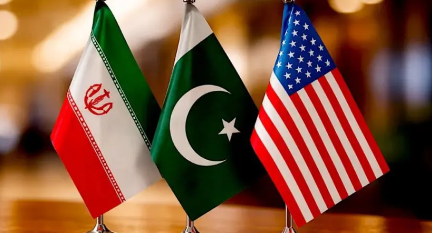
Islamabad (Web Desk): The world has welcomed US-Iran ceasefire and appreciated Pakistan's mediation after Prime Minister Shehbaz Sharif announced on Wednesday that Washington and Tehran agreed to a two-week ceasefire, signaling a temporary but important pause in the ongoing conflict in the Middle East.
In a post on X, the premier wrote, "With the greatest humility, I am pleased to announce that the Islamic Republic of Iran and the United States of America, along with their allies, have agreed to an immediate ceasefire everywhere, including Lebanon and elsewhere, EFFECTIVE IMMEDIATELY."
PM Shehbaz, who played a key role in facilitating this agreement, also invited both sides to gather in Islamabad on April 10 "to further negotiate for a conclusive agreement to settle all disputes."
He added, "We earnestly hope that the ‘Islamabad Talks’ succeed in achieving sustainable peace and wish to share more good news in coming days!"
With the greatest humility, I am pleased to announce that the Islamic Republic of Iran and the United States of America, along with their allies, have agreed to an immediate ceasefire everywhere including Lebanon and elsewhere, EFFECTIVE IMMEDIATELY.
— Shehbaz Sharif (@CMShehbaz) April 7, 2026
I warmly welcome the…
Pakistan has been at the forefront of diplomatic initiatives during the crisis, organizing meetings with regional powers and supporting behind-the-scenes talks between Tehran and Washington.
Moreover, Islamabad the country worked closely with Beijing on a strategy that emphasizes reducing tensions, protecting critical infrastructure, and establishing a lasting peace framework.
The ceasefire announcement has drawn international attention and received praise from leaders around the world.
United Nations (UN) Secretary-General Antonio Guterres welcomed the announcement of a two-week ceasefire in the Middle East, urging all parties involved to honor their obligations under international law and strictly adhere to the terms of the truce. He stressed that this step could pave the way for a lasting and comprehensive peace in the region.
.@antonioguterres welcomes the announcement of a two-week ceasefire by the United States and Iran. He expresses sincere appreciation for the efforts of Pakistan and other countries involved in facilitating the ceasefire.
— UN Spokesperson (@UN_Spokesperson) April 8, 2026
Full statement: https://t.co/5ZsOGcbIj5
British Prime Minister Keir Starmer described the ceasefire as a development that will "bring a moment of relief to the region and the world."
I welcome the ceasefire agreement reached overnight, which will bring a moment of relief to the region and the world.
— Keir Starmer (@Keir_Starmer) April 8, 2026
Together with our partners we must do all we can to support and sustain this ceasefire, turn it into a lasting agreement and re-open the Strait of Hormuz.
British High Commissioner to Pakistan Jane Marriott also acknowledged Pakistan’s crucial behind-the-scenes diplomatic role, thanking the country for its discreet yet effective efforts in facilitating the ceasefire.
Thank you Pakistan for the quiet, effective, diplomatic role you have played in bringing about this vital ceasefire. @CMShehbaz @ForeignOfficePk https://t.co/frHAYxtYTS
— Jane Marriott (@JaneMarriottUK) April 8, 2026
Germany’s Chancellor Friedrich Merz called the ceasefire an opportunity to pursue a durable resolution to the conflict, adding on X, "We thank Pakistan for its mediation."
I welcome the two-week ceasefire agreed by the United States and Iran last night.
— Bundeskanzler Friedrich Merz (@bundeskanzler) April 8, 2026
We thank Pakistan for its mediation.
The aim now is to negotiate a lasting end to the war. We are in close coordination with our partners on this matter.
The Kingdom of Saudi Arabia similarly welcomed the announcement by President Trump and Prime Minister Shehbaz regarding the US-Iran agreement, noting the “fruitful efforts made by Pakistan and General Asim Munir, Commander of the Defence Forces and Chief of Staff of the Pakistani Army, in reaching this agreement.”
I welcome the two-week ceasefire agreed by the United States and Iran last night.
— Bundeskanzler Friedrich Merz (@bundeskanzler) April 8, 2026
We thank Pakistan for its mediation.
The aim now is to negotiate a lasting end to the war. We are in close coordination with our partners on this matter.
Turkiye expressed strong support through its Foreign Ministry, emphasizing "the necessity of the full implementation of the temporary ceasefire on the ground" and stressing that all parties must respect the agreement.
The ministry added that it would continue to provide support for negotiations in Islamabad and congratulated Pakistan, stating, "We congratulate brotherly Pakistan for its role throughout this process and express our wish for the continuation of all initiatives that contribute to peace."
Regarding the Temporary Ceasefire Announced in the War in the Region https://t.co/iK3yhBOJC1 pic.twitter.com/imEsEe8fct
— Turkish MFA (@MFATurkiye) April 8, 2026
Swedish Foreign Minister Maria M Stenergard welcomed the ceasefire, highlighting Pakistan’s mediation, and noted that the agreement could "create conditions for restoring free passage through the Strait of Hormuz."
Välkommet att USA och Iran efter viktiga medlingsinsatser av bland annat Pakistan har kommit överens om två veckors ömsesidig vapenvila, vilket också kan skapa förutsättningar för att återupprätta fri passage genom Hormuzsundet.
— Maria M Stenergard (@MariaStenergard) April 8, 2026
Det är avgörande att alla parter nu visar största…
Russia’s Deputy Chair of the Security Council Dmitry Medvedev said the ceasefire reflected that common sense had prevailed but warned that "there'll be no cheap oil."
Ukraine’s Foreign Minister Andrii Sybiha also expressed support, praising both the agreement between President Trump and the Iranian regime and Pakistan’s role in the process.
Kazakhstan’s President Kassym-Jomart Tokayev recognized the ceasefire as an achievement made possible through the mediation of Prime Minister Shehbaz Sharif and Chief of Army Staff Field Marshal Syed Asim Munir.
???????? President Kassym-Jomart Tokayev welcomes the achievement of an agreement on a full ceasefire and truce in the #MiddleEast, reached with the mediation of Prime Minister of #Pakistan Shehbaz Sharif (@CMShehbaz) and Chief of Army Staff of Pakistan, Field Marshal Asim Munir.
— Press Office of the President of Kazakhstan (@aqorda_press) April 8, 2026
This…
Australian Prime Minister Anthony Albanese and Foreign Minister Penny Wong jointly welcomed the news, expressing hope for a lasting resolution, while New Zealand’s Foreign Minister Winston Peters acknowledged the truce but stressed that further steps are necessary.
— Anthony Albanese (@AlboMP) April 8, 2026
New Zealand’s Foreign Affairs Minister, Winston Peters praised Pakistan and expressed appreciation for the newly announced truce, describing it as a positive step. However, he cautioned that this was only the beginning and that far more efforts would be necessary to achieve lasting resolution.
New Zealand welcomes the announcements by the United States and Iran over the past few hours - as we welcome all efforts to bring an end to this conflict.
— Winston Peters (@NewZealandMFA) April 8, 2026
While this is encouraging news, there remains significant important work to be done in the coming days to secure a lasting…
Malaysian Prime Minister Anwar Ibrahim conveyed confidence in the negotiation process, praising Pakistan’s impartial and courageous diplomacy.
He stated that Pakistan’s efforts reflect "the highest traditions of Muslim solidarity and international responsibility," and extended congratulations to Prime Minister Shehbaz Sharif for his tireless role in achieving the ceasefire.
I wholeheartedly welcome the latest development in the current US-Iran war, in respect of the ten-point plan as proposed by Iran and positively received by the US.
— Anwar Ibrahim (@anwaribrahim) April 8, 2026
This proposal augurs well for the restoration of peace and stability, not only to the region but also the rest of… pic.twitter.com/Gyy9vtjJPD
Egypt’s Ministry of Foreign Affairs called the truce a crucial opportunity for constructive dialogue and negotiations, emphasizing the need for a full stop to military operations and respect for freedom of international navigation.
Oman’s Foreign Ministry also welcomed the announcement and commended Pakistan’s efforts in bringing an end to the hostilities.
#بيـان | تعرب وزارة الخارجية عن ترحيب سلطنة عُمان بإعلان وقف اطلاق النار بين الجمهورية الإسلامية الإيرانية والولايات المتحدة الأمريكية، وتُثمن الجهود التي بذلتها جمهورية باكستان الإسلامية في هذا الإطار وكافة الأطراف الداعية لوقف الحرب.
— وزارة الخارجية (@FMofOman) April 8, 2026
وتؤكد سلطنة عُمان على أهمية تكثيف الجهود… pic.twitter.com/vXxpYL5lJY
Japan’s Chief Cabinet Secretary Minoru Kihara described the ceasefire as a “positive move” while the country awaited a “final agreement,” highlighting the importance of de-escalating tensions in the Middle East.
Iraq echoed the sentiment of cautious optimism, urging "serious and sustainable dialogue" between the US and Iran to tackle the root causes of the conflict. The Iraqi Foreign Ministry stressed the need for strict adherence to the ceasefire and the avoidance of any escalatory actions, according to Al Jazeera.
Portugal’s Foreign Ministry celebrated the ceasefire and the reopening of the Strait of Hormuz, thanking Pakistan for its mediation and emphasizing that
"This is a decisive first step toward a lasting and sustainable diplomatic solution to the conflict."
Azerbaijan’s Ministry of Foreign Affairs expressed hope that the truce would reduce regional tensions and promote long-term peace and stability, calling on all parties to engage in constructive dialogue to build trust and resolve existing issues.
AZ
— MFA Azerbaijan ???????? (@AzerbaijanMFA) April 8, 2026
Amerika Birləşmiş Ştatları və İran İslam Respublikası arasında elan olunmuş atəşkəslə bağlı bəyanat
⬇️⬇️⬇️https://t.co/gSXYZ6v4bd
ENG
Statement on the ceasefire announced between the United States of America and the Islamic Republic of Iran
⬇️⬇️⬇️… pic.twitter.com/am4nx4msIh
Across the globe, reactions to the ceasefire consistently highlighted Pakistan’s vital role as a mediator, reflecting a shared recognition that careful diplomacy and international cooperation are key to achieving lasting peace in the region.
Neo News | Copyright © 2026