Wed, September 16, 2026

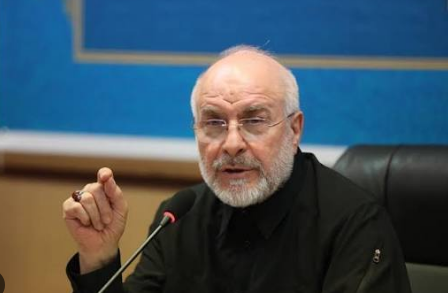
Tehran (Web Desk): Iranian Parliament Speaker Mohammad Bagher Ghalibaf on Sunday warned the United States (US) that any fresh assault on Iran’s interests or security would be answered with a response that would come more rapidly and carry greater intensity and pain.
Addressing lawmakers during a parliamentary sitting, Ghalibaf said Tehran had moved beyond what he termed “proportionate responses” and asserted that Iran’s latest military actions against American bases should be viewed as just the first step.
“The Americans must have understood that the era of ‘proportionate responses’ is over,” he said.
“If they have not understood it by now, they should understand before it is too late that the rules of the game have changed, and from now on, any aggression against Iran’s interests and security will receive a faster, heavier and more painful response,” he added.
Ghalibaf further asserted that Iran’s attacks on US military installations had placed Washington under mounting pressure. He also alleged that American authorities were using artificial intelligence to create images and videos aimed at depicting battlefield developments in a way that supported their narrative.
The warning was issued as the conflict, which started after the United States and Israel launched strikes against Iran in February, continued. Tehran responded by launching missile and drone attacks against American targets in various locations across the region.
In June, Iran and the United States reached a memorandum of understanding with Pakistan and Qatar acting as mediators. The arrangement set out measures intended to bring the fighting to an end, facilitate the reopening of the Strait of Hormuz and deal with economic restrictions.
Since then, Tehran and Washington have traded accusations over alleged failures to fulfil the obligations outlined in the memorandum. At the same time, military tensions have remained, with disagreements also continuing over sanctions and navigation through the Strait of Hormuz.
Iran has conducted a number of missile and drone strikes against US military installations in the region during the confrontation, while the United States has maintained its military campaign against Iranian targets.
Neo News | Copyright © 2026