Thu, September 17, 2026

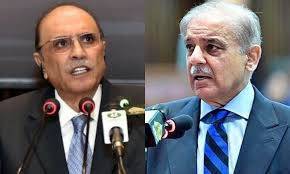
Islamabad (Web Desk): President Asif Ali Zardari and Prime Minister Shehbaz Sharif on Sunday honoured the sacrifices of the Armed Forces’ martyrs, veterans and their families on Defence and Martyrs’ Day, reiterating Pakistan’s determination to safeguard its sovereignty, national security and pursuit of peace.
In his message, President Zardari paid homage to the martyrs, veterans and their families on behalf of the nation, saying their sacrifices had become enduring examples of bravery and patriotism and would continue to inspire future generations.
He said September 6 remained an important date in Pakistan’s history as it brought back memories of the sacrifices rendered to protect the country’s independence, sovereignty and security.
“Defence and Martyrs’ Day provides us with an opportunity to pay tribute to the immortal sacrifices of the brave sons of the nation who, in 1965, demonstrated unparalleled resolve, courage and devotion in defence of our beloved homeland, defeating the enemy’s nefarious designs on every front,” he said.
The president said the national unity and unwavering faith displayed by the people and the Armed Forces on September 6, 1965, represented the collective strength of the country.
“This day reminds us that when a nation stands united in defence of its freedom, sovereignty and homeland, no power can defeat its resolve,” he said.
President Zardari said the determination associated with September 6 had once again been demonstrated through the success of Operation Bunyanum Marsoos, saying the victory in Marka-e-Haq had carried forward the same spirit of patriotism and love for freedom associated with the historic day.
“Marka-e-Haq has added another glorious chapter to our national history,” he said, calling the achievement proof of the Armed Forces’ professionalism, courage and valour as well as the deep and enduring connection between the military and the people.
He said Pakistan continued to favour peace, dialogue and mutual respect both within the region and internationally, noting that the country had increasingly established itself as a net provider of regional security.
The president termed the Makkah Joint Defence Agreement evidence of Pakistan’s commitment to regional security and its expanding position as a “responsible and dependable partner” in efforts aimed at maintaining regional peace and stability.
He nevertheless made it clear that Pakistan would not compromise over its sovereignty, territorial integrity or national security.
President Zardari said the international community needed to acknowledge that durable peace in South Asia would remain elusive unless the Kashmir dispute was settled in line with UN Security Council resolutions and the wishes of the Kashmiri people.
He also urged India to stop supporting terrorism in Pakistan through proxies, stating that United Nations reports had indicated that Fitna al Khawarij and Fitna al Hindustan had benefited from external patronage.
“In every conventional and unconventional war imposed by the enemy, our Armed Forces have demonstrated their vigilance, preparedness and unwavering commitment to defending the country,” he said, adding that the nation remained “shoulder to shoulder” with the Armed Forces.
The president further pointed out that Pakistan’s national strength was dependent on more than military preparedness, stressing the importance of economic stability, political tolerance, unity, education and development.
“Together, we must play our part in building a bright, secure and developed Pakistan for our youth and future generations,” he said.
He reaffirmed the country’s determination to protect its freedom, sovereignty and security “at all costs” and urged the nation to work towards building, in line with the vision of Quaid-e-Azam Muhammad Ali Jinnah, a “strong, democratic, prosperous and developed state”.
Prime Minister Shehbaz Sharif also expressed deep respect for the martyrs, veterans and their families, paying tribute to their sacrifices on behalf of the Pakistani nation.
In his message, he referred to September 6 as a “glorious chapter” in the country’s history, recalling the courage, unity and sacrifices displayed by the Armed Forces and the people while defending the homeland.
He said Defence and Martyrs’ Day served as a reminder of the immense sacrifices made by the martyrs and veterans to protect Pakistan’s independence, sovereignty and security.
“Despite the enemy’s undeclared aggression and numerical superiority on September 6, 1965, the professionalism and operational preparedness of the Armed Forces inflicted a humiliating and resounding defeat upon it on all fronts,” the prime minister said.
Shehbaz Sharif said the 1965 war highlighted the extraordinary courage and professional capabilities of the Armed Forces, while the people of Pakistan responded with exceptional unity, resilience and determination.
Speaking about Marka-e-Haq, he said the Armed Forces, under the professional command of Chief of Army Staff (COAS) and Chief of Defence Forces (CDF) Field Marshal Syed Asim Munir, Air Chief Marshal Zaheer Ahmad Babar Sidhu and Naval Chief Admiral Naveed Ashraf, had given a response to the country’s “age-old adversary” that would remain etched in history for generations.
“The entire nation is proud of our brave Pakistan Army, Pakistan Air Force and Pakistan Navy,” he said.
The prime minister said Operation Bunyanum Marsoos had further enriched the country’s military history and proved that the courage and passion associated with September 6 continued to burn brightly.
He stressed that the difficulties facing Pakistan demanded greater unity and national cohesion, warning that the country’s traditional adversary, together with Fitna al Khawarij and Fitna al Hindustan, continued to work against Pakistan’s interests.
“The sinister designs of hostile forces seeking to destabilise Pakistan through hybrid warfare shall be resolutely defeated,” he said.
PM Shehbaz identified ignorance, poverty and underdevelopment among Pakistan’s major challenges and called for national efforts to transform the country according to the ideals of Quaid-e-Azam Muhammad Ali Jinnah and Allama Muhammad Iqbal.
“Our true strength lies not only in our defence capabilities but also in a united, peaceful, stable and economically strong nation,” he said.
He said the government would remain focused on reinforcing the country’s defence, security and sovereignty while also pursuing economic growth, political stability and the welfare of the people.
The prime minister said Pakistan would continue contributing positively and actively towards peace and stability at both regional and international levels, describing the Makkah Joint Defence Agreement as another indication of Pakistan’s expanding role in regional security.
He repeated Pakistan’s longstanding stance that sustainable peace in South Asia could not be achieved without resolving the Kashmir dispute according to UN Security Council resolutions and the aspirations of the Kashmiri people.
Marking the occasion, the premier urged the nation to incorporate Quaid-e-Azam’s principles of “faith, unity and discipline” into everyday national life.
“Let us work together to build a strong, prosperous and developed Pakistan,” PM Shehbaz said, adding that a strong defence provided the foundation for sustainable peace and development.
Neo News | Copyright © 2026