Thu, September 17, 2026

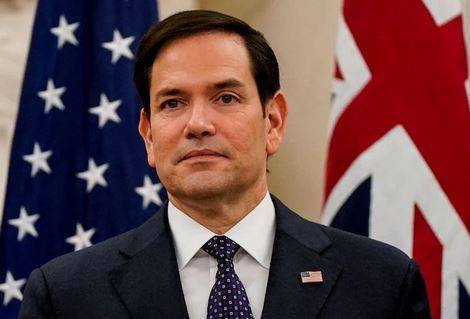
Washington (Web Desk): US Secretary of State Marco Rubio has declared that the military campaign referred to as “Operation Epic Fury,” the US term for coordinated American and Israeli strikes against Iran, has now been brought to a close.
He said the United States has already met its main objectives and has no intention of restarting hostilities or pushing the situation into a wider escalation.
Speaking to reporters at a tense White House briefing on Tuesday, where he stood in for Press Secretary Karoline Leavitt, Rubio said the phase had ended and briefed Congress accordingly, noting, “The operation is over. Epic Fury… we are done with that stage of it.”
He explained that during the operation, US forces targeted and destroyed Iran’s short-range ballistic missile systems, launch sites, production facilities, and elements of its naval strength.
According to him, these strikes were designed to prevent Tehran from building any protective military “shield” around its nuclear programme. He described the outcome as a significant success and said it represented the original purpose of the mission.
Rubio also said Washington is not planning to return to combat operations or widen the conflict, but is now moving toward a new phase referred to as “Project Freedom,” which will focus on securing maritime traffic through the Strait of Hormuz by deploying defensive naval escorts for commercial shipping.
He stressed that there was no immediate response from the Iranian government regarding his remarks.
The escalation in the region began after the United States and Israel launched military action against Iran on February 28, which led to Iranian retaliatory strikes targeting US forces, Israel, and American allies in the Gulf.
The situation also caused major disruption to shipping activity in the Strait of Hormuz.
A ceasefire, mediated by Pakistan, came into force on April 8. However, follow-up discussions held in Islamabad did not succeed in producing a long-term agreement.
The truce was later extended indefinitely by US President Donald Trump, and from April 13 onward the United States began enforcing a naval blockade affecting Iranian maritime movement in the strategic waterway.
Rubio said the ongoing measures were inflicting heavy economic pressure on Iran, estimating the daily cost at around $430 million. He characterised the current phase, “Project Freedom,” as strictly defensive in nature and separate from the earlier military operation.
He clarified that US forces would not initiate fire and would only respond if attacked, stating that the approach was defensive and conditional on first contact.
Recent exchanges of fire have taken place in the Strait of Hormuz area, though Rubio insisted that the ceasefire remains in effect and that the earlier operation has fully concluded on the military side.
He also warned Iran over its actions in the region, arguing that it has no authority over the Strait of Hormuz and cannot disrupt global shipping routes. He said attempts to block or attack vessels and deploy mines were unacceptable and could not be normalised.
In strong language, Rubio criticised Iran’s leadership, calling them “insane in the brain,” and referenced Ice Cube lyrics while warning Tehran to “check yourself before you wreck yourself.”
He further warned that a nuclear-armed Iran would create severe global consequences, including the risk of prolonged closure of the Strait of Hormuz and a sharp rise in global energy prices.
He linked maritime disruptions to Iran’s nuclear ambitions, saying US operations had already removed what he described as Iran’s ability to conceal its programme behind military cover.
Rubio added that Iran should not challenge US resolve, particularly under President Donald Trump.
When asked about progress regarding Iran’s nuclear materials, Rubio said negotiations were still ongoing. He explained that discussions include not only uranium enrichment but also the fate of nuclear material allegedly stored deep underground, which he said remains accessible to Iran.
He declined to provide further details, citing the sensitivity of the diplomatic process and the need not to jeopardise negotiations.
He also expressed disagreement with the 1973 War Powers Act, which requires presidents to inform Congress within 48 hours of military deployment and seek authorisation for extended operations after 60 days.
Rubio argued the law is not constitutional, although he acknowledged that the administration is still complying with its requirements in practice, including notifying Congress and relevant leadership bodies within the mandated timeframe after the start of hostilities.
Neo News | Copyright © 2026