Thu, September 17, 2026

By: Maheen Fatima
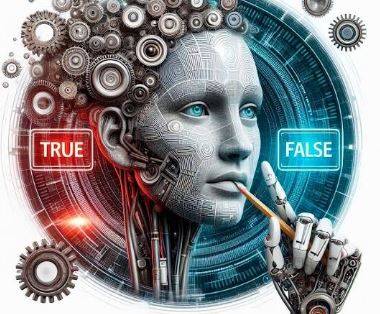
Here is a confession. A few days back, I asked an AI chatbot about a news event. Nothing complicated, just a quick question because I was in a hurry. It gave me this perfect, confident answer. It even included a quote from an official. I almost used it. Then something nagged at me, and I went looking for the original quote. It didn't exist. The official never said it. The AI had just made it up. And it made it up so smoothly that if I would have been a little lazier that day, I would have repeated it as fact. I later learned there's a name for this: an AI hallucination. And ever since I heard Dr. Ayesha Ashfaq unpacked this in a session, honestly, I can't unsee it.
This session was a part a workshop under the project titled ‘Digital Trust and Free Expression in the Era of AI', organized by the Department of Media and Development Communication, University of the Punjab with the support of the U.S. Mission to Pakistan in partnership with the Pakistan-U.S. Alumni Network where I realized that tools like ChatGPT don't know they are wrong. They generate text that sounds right. Sometimes that text is accurate, and sometimes it's a fake statistic, an invented source, or a quote nobody ever gave. The scary bit is not that AI makes mistakes. I make mistakes. You make mistakes. The scary bit is how it makes them: fluently, confidently, with zero hesitation in its voice. At least when a human is unsure, you can hear it. "I think it was... maybe 2019?" An AI never says ‘maybe’. It just tells you 2019 like it was there. Journalism runs on one simple promise: what we tell you has been checked. A hallucinating AI breaks that promise while sounding more certain than any reporter ever would.
I keep thinking about our own information environment. We already live in the land of the WhatsApp forward ("beta, yeh zaroor parhna, aage bhejo") where a rumor reaches ten thousand phones before anyone asks who started it. Now imagine newsrooms, under pressure and understaffed, quietly using AI to draft stories or do "quick research." One fabricated detail slip through, gets published under a trusted outlet's name, and suddenly the rumor has a press card.
And here's what hurts more: every time that happens, people don't just stop trusting that one story. They trust journalism a little less. All of it. Including the honest, exhausting, shoe-leather kind. We're spending down a credibility account that took decades to build.
For a while I thought the safe position was to be anti-AI. Very noble, very "old school journalism." I have changed my mind. Because I have also seen what these tools can do if used well. Transcribing a two-hour interview in minutes (anyone who has transcribed by hand knows this is basically a miracle). Digging through massive datasets. Translating across languages. Suggesting an angle at 2 a.m. when your brain has given up. AI can take the donkeywork off a journalist's desk so the human can do the human things: knock on doors, earn trust, ask the uncomfortable question, sit with someone and listen.
The way I have come to think of it: AI is an amplifier. It amplifies whatever you feed it. Feed it laziness, it amplifies errors at scale. Feed it rigor, it amplifies your capacity. Same tool, opposite outcomes. Helpful? Absolutely. Fast? Incredibly. Allowed to publish anything without a senior checking it? Never in a million years.
That's really what "mitigation" means to me now. Not some fancy software, but a mindset. Every AI output is an unverified tip, not a fact. Cross-check it against a primary source. Tell your audience when AI was involved. Keep your skepticism always switched on, especially when the answer sounds perfect. Especially then. I am entering journalism at the exact moment its rulebook is being rewritten, which is either terrifying or exciting depending on how much sleep I've had. Most days, I choose exciting. Because here's the thing AI hallucinations accidentally taught me: they're the best argument for human journalists I've ever seen. A machine can generate a story. Only a human can stand behind one. When my name sits on a byline, that's me telling you that I checked this, and I'm accountable for it. No algorithm can sign that for me. And honestly? I hope it never can.
The views, thoughts, and opinions expressed in this blog are solely those of the author and do not necessarily reflect the official policy or position of the U.S. Mission to Pakistan or USEFP/PUAN.
The writer is a student of Media and Development Communication at University of the Punjab, Lahore and an active content creator on social media.
Neo News | Copyright © 2026