Thu, September 17, 2026

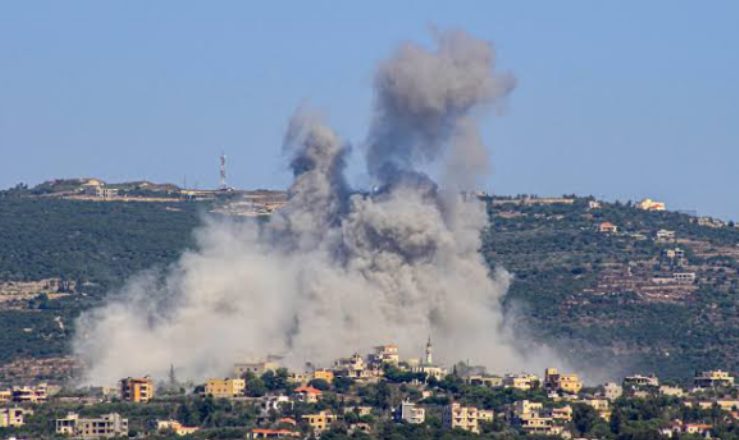
New York (Web Desk): UN peacekeepers in Lebanon have warned that the security situation along the Blue Line has deteriorated significantly, as Israeli military activity in the area has intensified in what the United Nations (UN) says amounts to violations of a key Security Council resolution.
UN spokesperson Stephane Dujarric said on Thursday that Israeli forces had stepped up attacks along the line separating the two sides, raising fresh concerns over Lebanon’s security and sovereignty.
At the same time, humanitarian operations have continued in war-ravaged Gaza, where UN teams gathered hundreds of pallets of essential supplies, including food for babies and young children as well as school bags.
The World Health Organization (WHO), meanwhile, said more than 13,000 patients have been taken out of Gaza for urgent medical treatment since October 2023.
The UN peacekeeping mission recorded a sharp increase in violence during August. On September 1 alone, UNIFIL detected 56 projectiles fired by the Israeli military, while the number rose to 84 on the following day.
By contrast, no launches of projectiles by Hezbollah have been recorded since June 21, Dujarric said. Hezbollah fighters have nevertheless remained involved in confrontations with Israeli forces in southern Lebanon despite a ceasefire brokered by the United States (US).
UN peacekeepers are also continuing to document daily Israeli violations of Lebanese airspace, as well as Israeli airstrikes, movements on the ground and naval operations.
Dujarric expressed particular concern over what he described as the ongoing strengthening and expansion of Israeli military positions north of the Blue Line. According to him, new structures and engineering projects are being established in the area.
Peacekeepers have additionally reported seeing people believed to be Israeli civilians involved in demolition activities linked to military operations.
“There is extensive Israeli military presence north of the Blue Line,” Dujarric said, describing it as a breach of UN Security Council Resolution 1701 as well as Lebanon’s sovereignty and territorial integrity.
He repeated the United Nations’ demand that Israeli forces leave all positions north of the Blue Line, saying such a withdrawal would be consistent with the requirements of Resolution 1701.
Despite the heightened tensions, the UN Interim Force in Lebanon (UNIFIL) has continued its humanitarian efforts. Between Monday and Wednesday, the mission helped coordinate 20 humanitarian operations, 16 of which took place in its western sector.
In Gaza, UN personnel on Wednesday received hundreds of pallets of humanitarian supplies through the Kerem Shalom-Karem Abu Salem crossing. The shipment included adult diapers, school supplies and food intended for infants and young children, Dujarric said.
Separately, the WHO said it and its partner organisations have helped evacuate more than 13,000 patients from Gaza for medical treatment since October 2023. More than 6,000 of those patients were children.
The health agency warned that many thousands of other patients still require specialised care that is not available inside Gaza. It also urged authorities to restore the medical referral route through the West Bank, including access to hospitals in East Jerusalem.
Dr. Ramiz Alakbarov, the UN Special Coordinator and humanitarian chief for the Occupied Palestinian Territory, completed a three-day visit to Gaza on Thursday. His trip included a visit to the Emirati Field Hospital in Rafah.
During his visit, Alakbarov highlighted preparations for the coming rainy and winter seasons as an immediate priority. He said urgent assistance from donors was needed, while restrictions imposed by Israel on equipment and supplies must also be eased.
Among the items currently facing restrictions on entry into Gaza are engine oil required to operate essential facilities such as sewage treatment plants.
Dujarric also said ambulances and medical equipment remain subject to restrictions on entering the enclave, stressing that such supplies need to be permitted into Gaza without further delay.
Neo News | Copyright © 2026