Thu, September 17, 2026

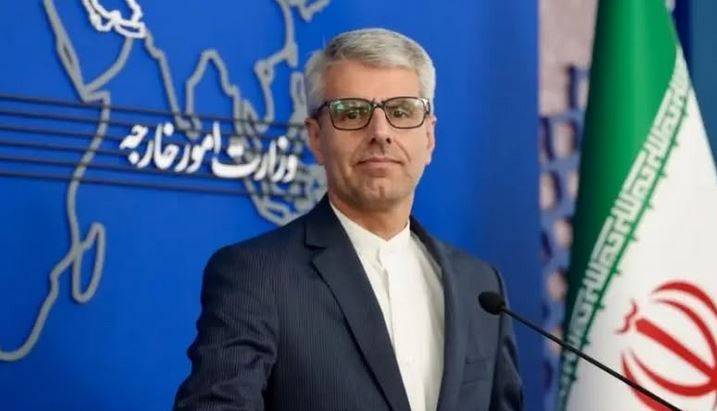
Tehran (Web Desk): Iran has denied claims that it is engaged in direct talks with the United States (US), while confirming that it is coordinating with Oman to create a temporary maritime passage in the Strait of Hormuz to protect commercial shipping through one of the world's most strategically significant waterways.
Addressing a media briefing, Iran’s Foreign Ministry spokesperson Esmaeil Baqaei said discussions with Oman are exclusively focused on guaranteeing the secure movement of vessels through the Strait.
He said that both countries are working to introduce an interim navigation route as quickly as possible to maintain the safety of maritime traffic.
According to Iran's semi-official Fars News Agency, Baqaei said the proposed arrangement would combine the southern shipping lane in Omani waters with the northern route inside Iran's territorial waters, forming a single two-way transit corridor that serves the interests of both neighbouring coastal states.
He stressed that the proposal is for one unified two-way passage rather than multiple separate routes. The temporary corridor, he added, will remain operational until a permanent alternative is developed.
The Iranian foreign ministry spokesperson also dismissed reports suggesting that Tehran is negotiating with Washington, stating unequivocally that no such discussions are taking place with the US.
His remarks followed comments by US President Donald Trump on Sunday, who announced that talks with Iran were expected to begin on Monday afternoon and expressed confidence that the two sides could soon reach an agreement concerning the Strait of Hormuz and Iran's denuclearization.
Baqaei further asserted that conditions in the Strait of Hormuz would remain unchanged as long as the US continued what he described as aggressive actions and its blockade.
Military tensions between the two countries escalated between July 8 and July 24, when the US and Israel carried out strikes on Iran.
Tehran responded by launching attacks on what it identified as US military facilities and equipment in several Arab countries, particularly Jordan, Bahrain and Kuwait.
The escalation unfolded even after Washington and Tehran signed Islamabad memorandum of understanding (MoU) in June and began negotiations aimed at achieving a comprehensive agreement.
However, those talks later reached a deadlock due to disagreements over security assurances and freedom of navigation in the Strait of Hormuz, a vital global shipping route that plays a critical role in international energy supplies and world trade.
Neo News | Copyright © 2026