Thu, September 17, 2026

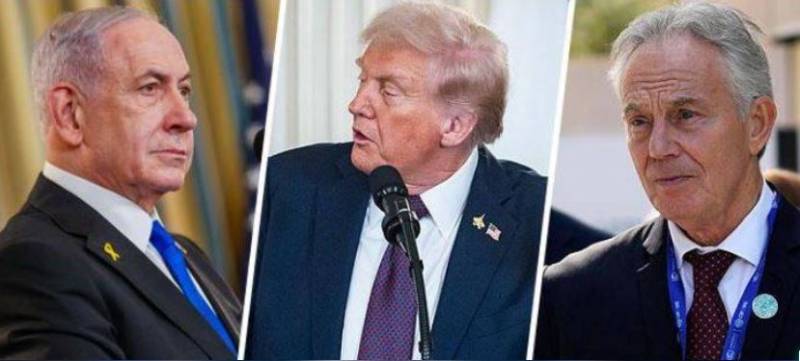
London/Washington (Web Desk): Speculation is mounting that former British Prime Minister Sir Tony Blair may play a key role in the post-war administration of Gaza. According to reports, former U.S. President Donald Trump’s 20-point peace plan includes the creation of an interim international authority, which Trump himself would chair, with a proposal to include Blair as part of that body.
Trump praised Tony Blair as a "very good man" and hinted that his involvement could be central to the plan. Blair has reportedly been in contact with American, Israeli, and Arab officials for months, working on proposals concerning Gaza's future governance.
During a meeting at the White House, Blair reportedly called Trump's plan “bold” and “a chance to end a two-year war.” Blair has a history of diplomatic involvement in the Middle East, having served as the Quartet's (U.S., Russia, EU, and UN) special envoy to the region in 2007. However, his role was largely focused on economic development rather than political negotiations.
Still, Blair’s potential involvement in Gaza is being met with significant skepticism — particularly in the Arab world. Many continue to associate his name with the 2003 Iraq War, which the UK supported under his leadership. Blair has faced intense criticism for backing false claims about weapons of mass destruction, with some even labeling him a “war criminal.”
UN Special Rapporteur Francesca Albanese reacted strongly on social media, writing: “Tony Blair? Absolutely not. Stay away from Palestine.”
Hamas senior official Husam Badran also dismissed the idea, saying, “Blair should face trial over the Iraq War, not be managing Gaza.” A large number of Palestinians view Blair as too close to the U.S. and Israel, and are unwilling to trust him with such a role.
Critics also cite Blair's ineffectiveness during his time as Quartet envoy, noting that he failed to make significant progress toward a Palestinian state and focused primarily on economic reforms.
Experts say that if Blair is given a role in Gaza, the success of such a move would depend on several key factors: Can he earn the trust of Palestinian leadership? Will he appear independent of Israeli Prime Minister Netanyahu? And will the plan be seen as a genuine international initiative — or simply as an American or British agenda?
Nick Hopton, Director General of the Middle East Association, noted, “Blair has experience and connections, but he must gain the confidence of the Palestinian leadership and people.”
Some diplomats suggest that Blair might be acceptable in a limited diplomatic role. However, if he were given direct responsibility for Gaza’s security, reconstruction, and political governance, it would likely prove to be a highly controversial decision. One Western diplomat remarked, “Viceroy Blair? That will never be accepted.”
Neo News | Copyright © 2026