Thu, September 17, 2026

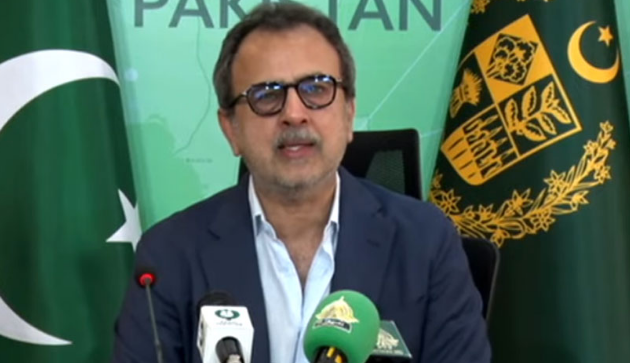
Islamabad (Web Desk): Federal Minister for Energy Owais Leghari has firmly rejected claims that the government plans to end electricity subsidies for protected consumers, calling such reports misleading and inconsistent with the facts.
Speaking about the government's ongoing efforts to reform Pakistan’s power sector, Leghari said the number of protected consumers has more than doubled over the past four years, rising from 9.5 million to 21.5 million.
He noted that nearly 29.57 million residential consumers, representing around 86 percent of the total domestic customer base, are currently benefiting from subsidized electricity.
The minister highlighted that financial support for electricity users has expanded significantly, with subsidies increasing from Rs199 billion to Rs423 billion.
Overall, the government is allocating Rs527 billion in subsidies to households and the agricultural sector. He assured consumers that those who qualify for assistance will continue to receive it without interruption through the QR code-based subsidy mechanism.
Leghari explained that a registration system has been introduced to ensure that only eligible consumers receive financial support. More than two million single-phase electricity users have already completed the registration process.
He stressed that reports suggesting the withdrawal of subsidies are incorrect, while government statements regarding reductions in electricity prices accurately reflect the current situation.
Discussing achievements in the power sector, the minister said the renegotiation and review of agreements with Independent Power Producers (IPPs) have generated savings amounting to Rs3.5 trillion.
He added that efforts to reduce losses in power distribution companies (DISCOs) have saved another Rs193 billion, while circular debt declined by Rs780 billion during the 2024-25 fiscal year.
Leghari further stated that disposing of excess machinery owned by JNCs contributed savings of Rs47 billion. According to the minister, these reforms have helped lower both electricity generation and distribution costs, producing visible improvements across the energy sector.
The minister maintained that consumers are already experiencing the benefits of these measures. He said lower subsidy requirements have reduced pressure on government finances, while industrial consumers are also facing a lighter burden from cross-subsidies.
Providing a breakdown of tariff reductions achieved between March 2024 and May 2026, he said electricity rates for protected consumers have dropped by 31 percent.
Domestic consumers have received a 16 percent reduction, industrial users have seen tariffs decline by 33 percent, commercial consumers by 8 percent, and agricultural users by 14 percent. He added that electricity prices in Azad Jammu and Kashmir have fallen by 45 percent during the same period.
The minister also noted that tariffs for bulk consumers have been reduced by 13 percent, while the national average electricity tariff has declined by 20 percent. He attributed these reductions to structural reforms and increased reliance on locally available energy resources.
Turning to Pakistan’s long-term energy goals, Leghari said the share of clean energy in the country's power mix is expected to rise from the current 55 percent to 90 percent by 2035.
Over the same period, electricity generated from domestic resources is projected to increase from 74 percent to 96 percent. He added that renewable energy currently accounts for 57 percent of the nation’s energy mix.
Drawing a regional comparison, the minister said renewable sources contribute approximately 48 percent of India’s energy mix. He emphasized that the government remains supportive of solar energy adoption and is focused on improving transparency and operational efficiency within the sector.
Leghari said the National Energy Plan includes the development of 8 gigawatts of distributed solar generation capacity. He added that the recently introduced net billing framework will have no impact on 90 percent of household consumers and that single-phase residential solar users will not face significant changes.
The minister also pointed to ongoing solarization initiatives in Gilgit-Baltistan and Gwadar. To encourage wider use of renewable energy, he announced that licensing requirements for solar installations of up to 25 kilowatts have been removed.
Leghari said that NEPRA has approved additional facilitation measures for small-scale solar projects following a request from the Power Division.
He added that digitization of the net billing process has improved transparency across the system.
Clarifying concerns surrounding solar policies, the minister said net metering remains in place and has not been abolished. Instead, the government has introduced reforms aimed at improving billing procedures and creating a fairer framework that protects the interests of both solar energy users and other electricity consumers.
Reaffirming the government's commitment, the minister said subsidies for protected consumers will continue and there is no plan to discontinue them.
Neo News | Copyright © 2026