Thu, September 17, 2026

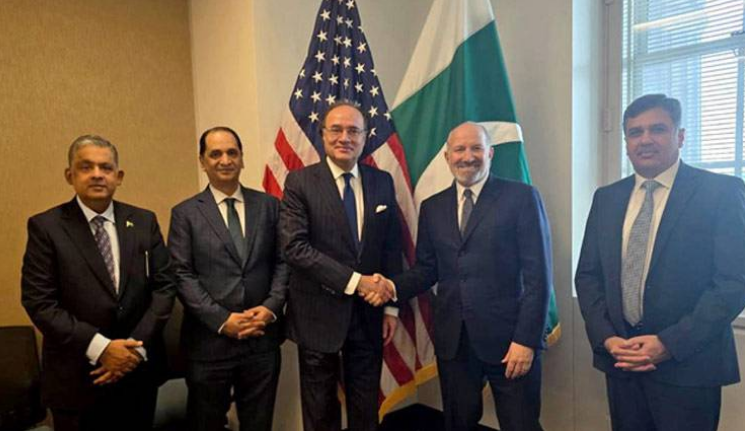
Washington (Web Desk): In a significant development for economic diplomacy, Pakistan and the United States (US) have reached a new trade agreement designed to strengthen commercial ties and expand mutual economic opportunities.
The pact was finaliSed during a high-level meeting in Washington, D.C., where Pakistan’s Finance Minister Muhammad Aurangzeb met with U.S. Secretary of Commerce Howard Lutnick and U.S. Trade Representative Ambassador Jamieson Greer.
The agreement was publicly confirmed by US President Donald Trump through a statement posted on his social media network Truth Social.
He described it as a milestone in U.S.-Pakistan relations, especially noting its focus on energy collaboration. According to Trump, both countries have agreed to work jointly on tapping into Pakistan’s substantial oil reserves, with deliberations underway to select the American company that will lead the project.
The accord includes provisions to lower tariffs on a reciprocal basis, with particular emphasis on easing the entry of Pakistani goods into the American market. Officials from both nations view this as a vital step toward enhancing export capacity and broadening market reach.
Beyond trade in goods, the agreement encompasses a broad spectrum of sectors. These include energy, mining, information technology, digital finance, and emerging areas such as cryptocurrency. By encouraging cooperation across these fields, both sides aim to create new channels for innovation, investment, and economic resilience.
The trade pact is also expected to increase American investment in Pakistan’s infrastructure and development projects. It reflects Islamabad’s ongoing strategy to diversify its economic partnerships, not only at the federal level but also by fostering collaborations with individual U.S. states.
Officials characterized the agreement as a reflection of shared intent to build a more dynamic and interconnected economic future. It signifies a renewed commitment by both nations to deepen bilateral engagement and pursue joint growth through open markets, strategic cooperation, and long-term investment.
Neo News | Copyright © 2026