Thu, September 17, 2026

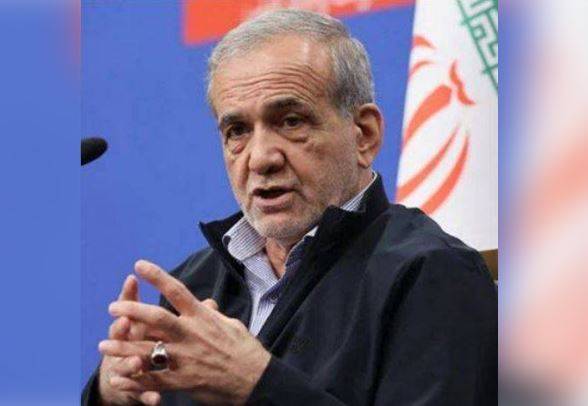
Tehran / Washington (Web Desk): Iranian President Masoud Pezeshkian has voiced strong criticism of the ongoing unrest and protest movement in the United States, linking it to public dissatisfaction over the US government’s “Israel First” policy.
According to the president, the American people are increasingly frustrated with their leadership and are no longer willing to remain silent in the face of policies that, in their view, prioritize foreign interests over domestic welfare.
President Pezeshkian highlighted that decision-making in the United States has shifted away from serving the interests of its citizens and instead revolves around unwavering support for Israel.
He warned that Americans have grown weary of being governed by what he referred to as “Israeli kings,” suggesting that a specific lobby exerts disproportionate influence over US politics.
He further explained that Washington’s policies favoring Israel have had tangible consequences on American society, diverting resources and attention away from domestic needs.
Recent protests in multiple US cities, branded under the slogan “No Kings”, reflect widespread public anger.
Protesters argue that policy decisions are being shaped not by elected representatives but by a powerful lobbying network, undermining democratic governance.
The demonstrators also raised concerns over US taxpayer money being allocated to foreign wars and military assistance to Israel rather than being invested in domestic welfare, education, or healthcare.
They are demanding an end to the “Israel First” approach, urging policymakers to prioritize an “America First” strategy that genuinely reflects the public interest.
Experts observing the movement suggest that this growing unrest signifies a deepening divide between US citizens and their political leadership, with broader implications for both domestic policy and foreign relations.
Neo News | Copyright © 2026