Thu, September 17, 2026

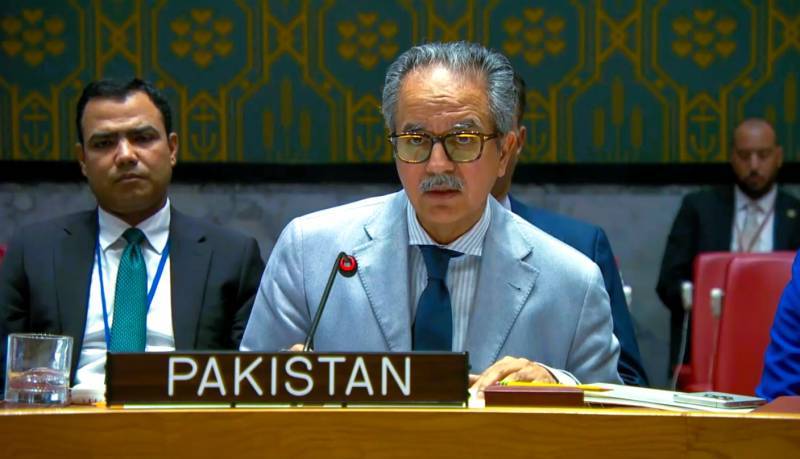
New York (Web Desk): Pakistan has called for the effective implementation of norms, upholding of international humanitarian law, and a preventative approach to combat the two-fold dynamic of conflicts and food insecurity across the globe.
Speaking at the United Nations Security Council’s (UNSC) High-level Ministerial Debate on the theme of “Food Under Fire: The Security Council’s Role in Mitigating Global and Local Food Crises,” Pakistan’s Permanent Representative to the United Nations (UN), Ambassador Asim Iftikhar Ahmad, expressed deep concern over the 2026 Global Report on Food Crisis, where conflict and violence have been identified as primary drivers of food insecurity worldwide.
“266 million people faced acute food insecurity last year, and acute hunger has doubled over the past decade. Today, 70 per cent of acutely food-insecure people live in fragile or conflict-affected regions,” he remarked.
The Ambassador stressed that the path forward was not an absence of norms, but the effective implementation of international humanitarian law to ensure that starvation and collective punishment shall never be used as military or political tools.
Referring to the conflicts such as Gaza, Yemen, Sudan, South Sudan, and Haiti, Ambassador Asim Iftikhar Ahmad stressed how worsening humanitarian conditions become directly intertwined with ongoing regional violence.
“Nowhere has the failure to uphold these obligations been starker than in Gaza. The deprivation of food and other essentials, restrictions on humanitarian assistance and destruction of civilian infrastructure have inflicted unbearable suffering on the Palestinian people,” he said.
The Ambassador also highlighted how conflicts and food shortages fuel economic disruptions across the globe, driving up global food and freight costs, and placing disproportionate burdens on developing countries already facing fiscal constraints and high dependence on both food and energy imports.
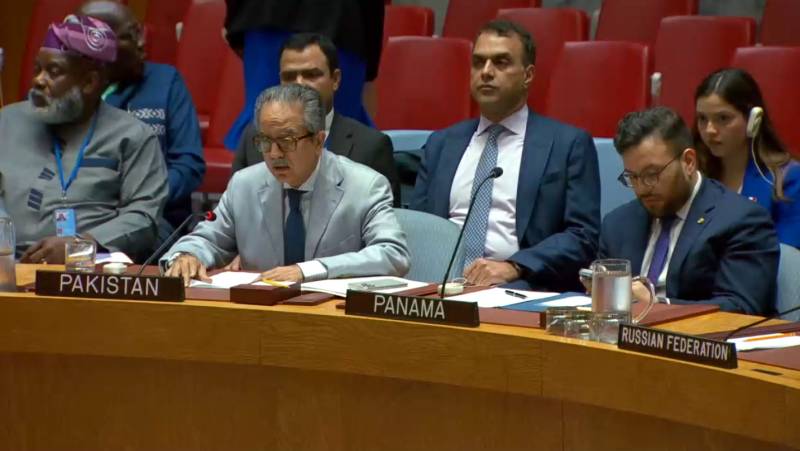
Pakistan urged a comprehensive and principled approach to mitigate the global food crises, stressing the need to strengthen accountability for deliberate obstruction, ensure that humanitarian assistance is not subjected to political or military calculations, and pursue preventive engagement.
“Warnings serve little purpose if the international community comes into action only after hunger has turned into famine. Credible assessments by the Secretary-General, WFP, FAO and other relevant UN entities should enable timely attention and preventive engagement”, Ambassador Asim said.
The Pakistan’s envoy stressed that humanitarian action alone could not be substitute for a political solution, and that a commitment to resolving conflicts through diplomacy, dialogue, and peaceful settlement is needed to bring about positive and sustainable change.
“Ultimately, there can be no lasting food security without peace. The task of this Council is therefore not merely to respond to the consequences of hunger, but to discharge its primary responsibility to prevent and resolve the conflicts that produce it,” Ambassador Asim Iftikhar Ahmad concluded.
Neo News | Copyright © 2026