Thu, September 17, 2026

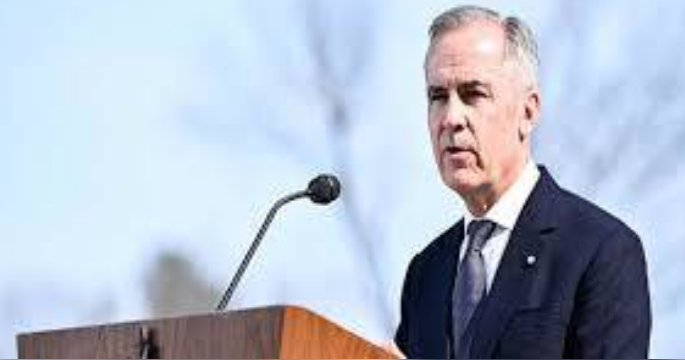
Ottawa (Web Desk): Mark Carney, who assumed office as Canada's Prime Minister just two weeks ago, has called for a snap election set for April 28.
The timing is unexpected, as the next election wasn't due until October 20. However, Carney has argued that the escalating tensions with the United States (US) under President Donald Trump require immediate action.
He emphasized that Trump's policies, especially on trade, threaten Canada's sovereignty, and he believes the country needs a strong mandate to navigate these challenges effectively.
Carney, a former central banker with no prior experience in political campaigns, ascended to the Liberal leadership by convincing party members that he was the best candidate to handle the growing pressures from Trump.
His swift decision to seek a mandate stems from his confidence in the Liberal Party's recovery in the polls, which has been dramatic since January.
The Liberal Party, which had been trailing the Conservative Party earlier in the year, is now slightly ahead, a shift Carney hopes to capitalize on.
Polling data indicates that the political landscape has shifted significantly. Voters who were initially seeking change are now focusing more on leadership qualities, with Carney's position strengthened by the current crisis.
Darrell Bricker, CEO of Ipsos Public Affairs, noted that the Conservatives have struggled to launch effective attacks on the Liberals, as the public is now more concerned with immediate issues than past political failures.
Despite Carney's relative political inexperience, the Conservative Party has focused much of its criticism on his status as an elitist and his alignment with former Prime Minister Justin Trudeau's government policies, particularly on spending.
Questions about Carney's personal finances, including the management of his assets in a blind trust, have also surfaced, leading to a tense exchange when Carney was questioned about it.
The Conservatives hope such moments of discomfort might serve as openings in what is his first campaign.
Another challenge for Carney is Quebec, where his struggle with the French language during a recent press conference raised concerns. Quebec, with its large French-speaking population, is a crucial battleground, and Carney’s difficulties in speaking French could be a significant liability.
In contrast, Conservative leader Pierre Poilievre, who speaks flawless French and has more experience in Canadian politics, is seen as a stronger contender in the province.
Nonetheless, political analysts suggest that Carney’s inexperience might not be as detrimental as expected, given the external pressures Canada is facing due to Trump.
Laura Stephenson, a politics professor at Western University, indicated that the comparison between the candidates would likely shift from political experience to leadership ability in managing the crisis with the United States.
Recent polls show the Liberals with a slight lead over the Conservatives. An online Angus Reid poll of 4,009 people placed the Liberals at 42% and the Conservatives at 37%, with a margin of error of about 1.5%. Similarly, a Leger poll of 1,568 people for the National Post put the Liberals at 42%, just ahead of the Conservatives at 39%, with a margin of error of 2.5%.
The close race means that every moment in the upcoming campaign will be crucial for both parties.
Neo News | Copyright © 2026